Honestly, I’m not very satisfied with most of the AI PPT products on the market.
They often emphasize ‘one sentence,’ ’30 seconds,’ or ‘one-click generation’ of PPTs.
I also often wonder if the creators of these AI PPT products actually don’t write PPTs themselves very often.
PPTs are about logic, and large language models are also about logic,
but when PPTs are combined with large language models, they end up just automatically applying PPT templates.
I always feel something isn’t quite right…
I don’t deny that current AI PPT products on the market can bring significant efficiency improvements in certain typical scenarios, groups, or organizations.
But for me—and I don’t know how you feel about it—
I think they are quite ‘chicken ribs’ (meaning something with little practical value but hard to discard),
they are definitely useful, but their usefulness seems limited.
So, I thought perhaps I could create an AI PPT more suited for us ‘office workers.’
Our PPTs often have a clearer purpose of ‘proving’ or ‘persuading,’
and compared to our parents’ generation, we have already mastered a solid foundation in computer operations.
Rather than letting AI apply PPT templates for us, we hope to fully utilize its knowledge and logical capabilities.
Thus, based on Feishu Multi-dimensional Tables, I created a somewhat different AI PPT workflow.
So, I created a somewhat different AI PPT workflow based on Feishu Multi-dimensional Spreadsheet.
It cannot directly apply PPT templates for me,
but to some extent, it can assist me in thinking and organizing the PPT logic.
Here is the direct link:
https://ilovezhiwai.feishu.cn/wiki/OJq3w7mFRiJjRnkBC5bcWOt3ngd?table=ldx1qY5akWfjHpKO
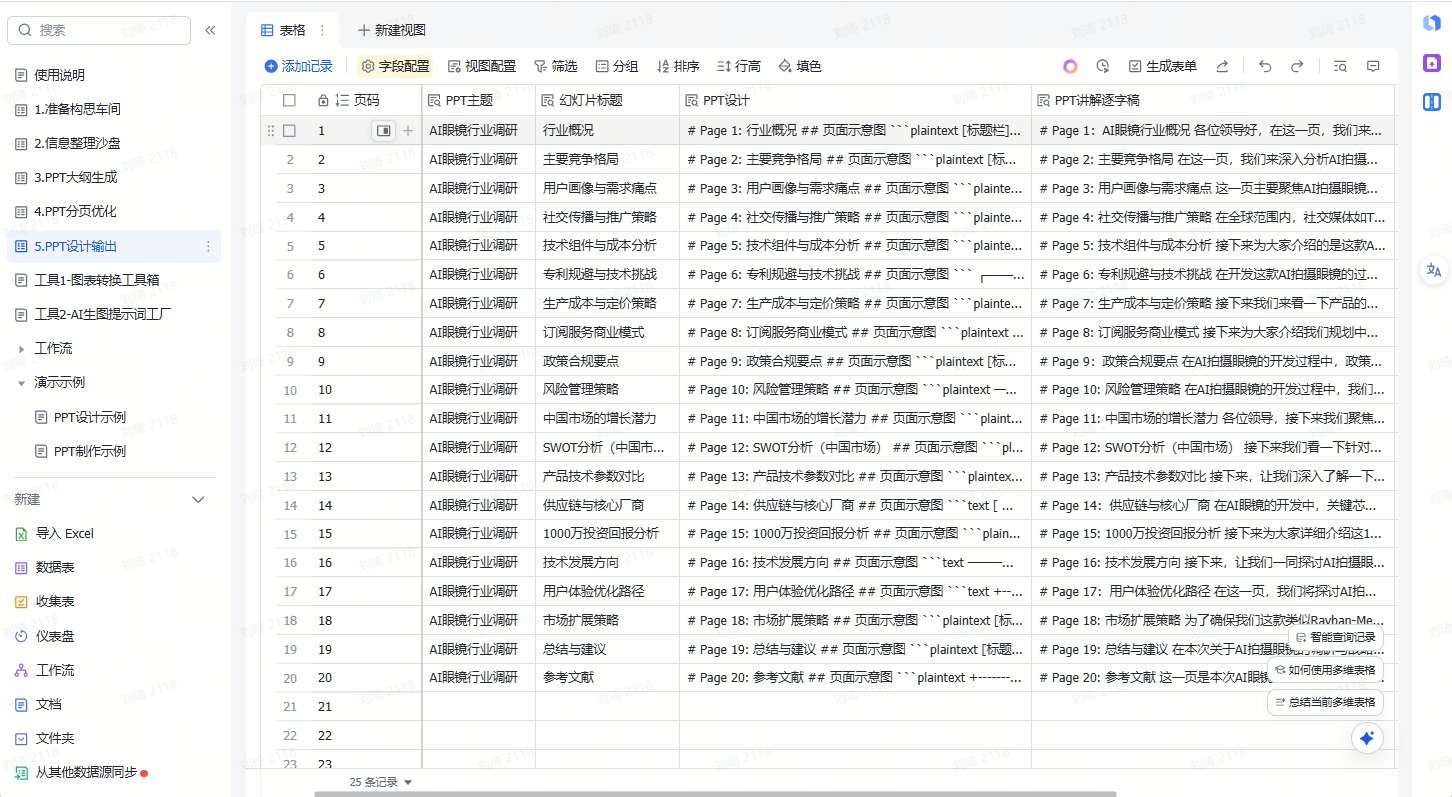
Below, I will use an actual PPT production case to introduce the features of this template.
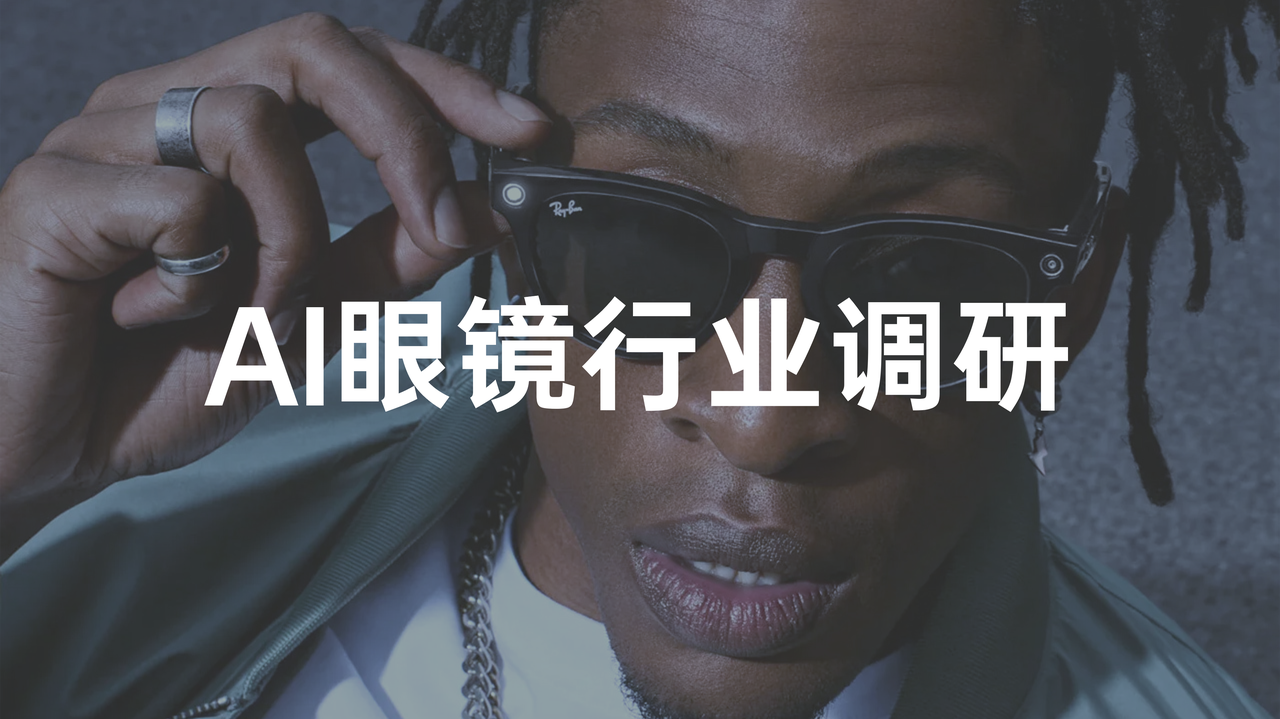
These are the 5 pages of PPT I created based on its suggestions:
1. Preparation Workshop
When a leader assigns me to write a PPT, I always instinctively ask:Who is it for? What is the purpose? What needs to be considered?
After understanding these details, I start gathering materials and begin writing with the leader’s objective in mind.
I think it’s the same when humans assign work to AI.
Therefore, in this step, we first fill in the topic of the PPT we want to write, the purpose of writing this PPT, and what needs to be noted.

For my example here, it’s about writing a PPT on「AIEyewear Industry Research」.
The purpose is「to persuade my boss to invest 10 million to develop a product like Rayban-Meta2AIShooting glasses。
It should be noted that‘I am only planning to do the domestic market’。
At this point, if I were to prepare the materials myself, I would typically start searching and thinking simultaneously.
With the involvement of AI, I can have it tell me in advance what to look for.
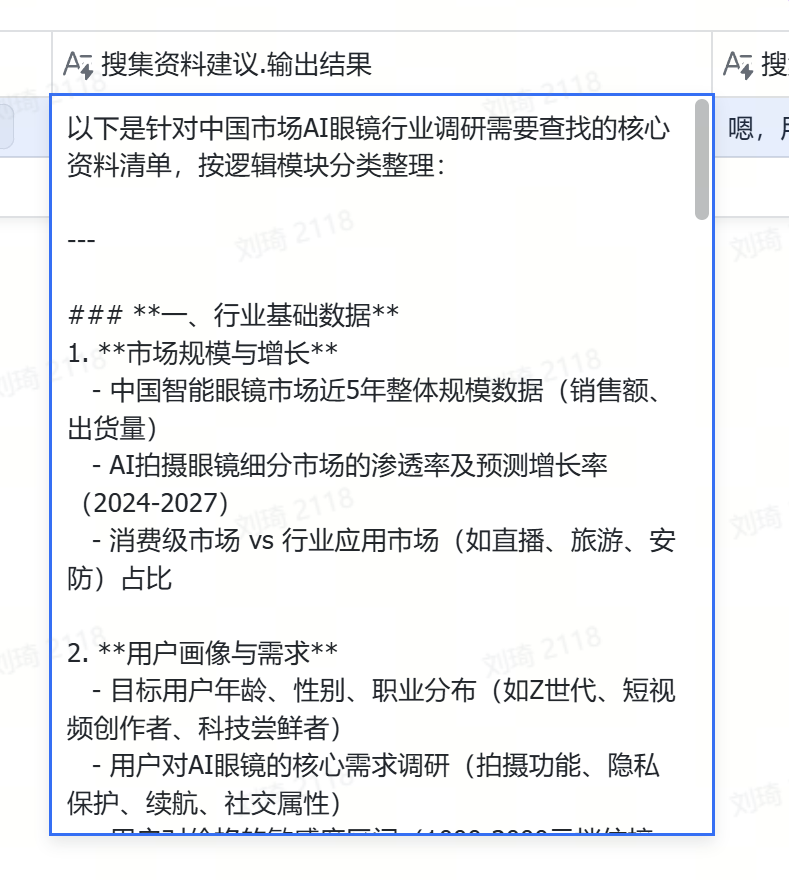
DeepSeek-R1 suggested that I could look forbasic industry data, user profiles and needs, competitive analysis from both domestic and international markets, core technologies used in the product, supply chain costs, relevant regulations and policies, profit modelsand so on.
Simultaneously, based on R1’s search suggestions, I generated a Prompt:
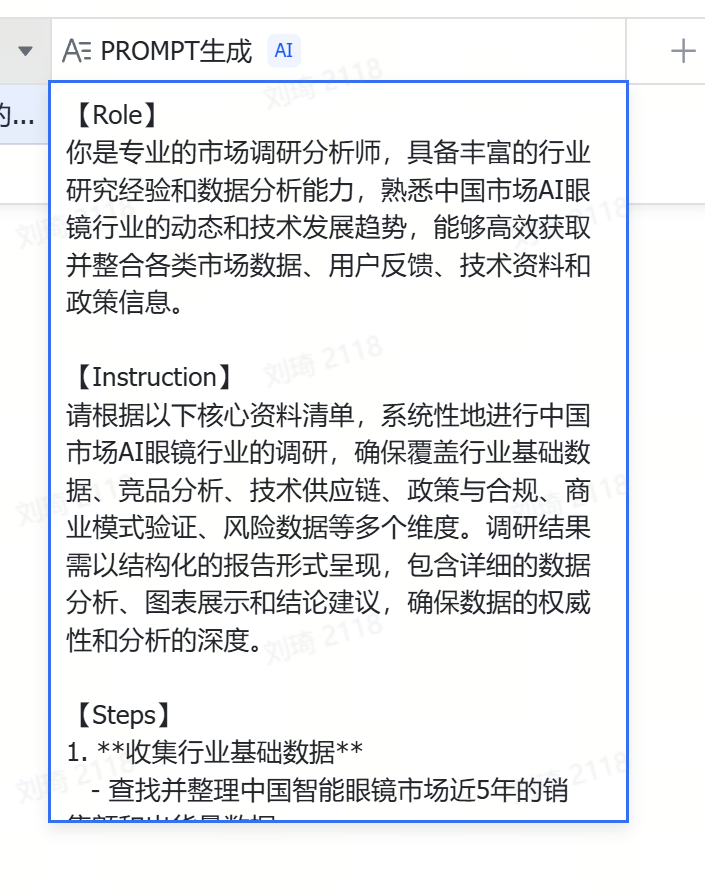
This Prompt incorporates Workflow design, which can yield relatively stable results even in some older instruction-based AI tools.
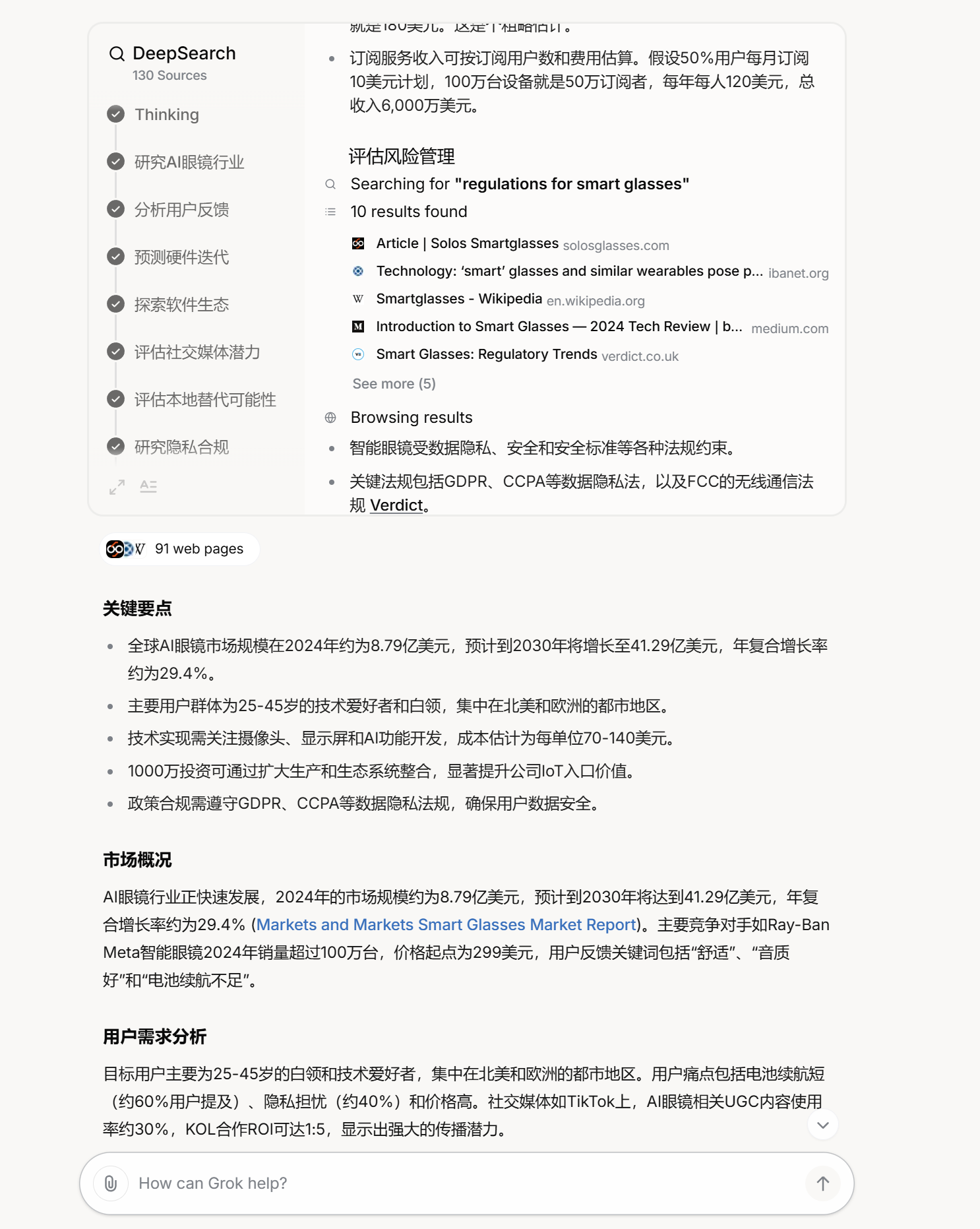
Of course, I would recommend using newer features, such as the currently popularDeep Reaserch。
For example, I sent this search Prompt to Grok3:
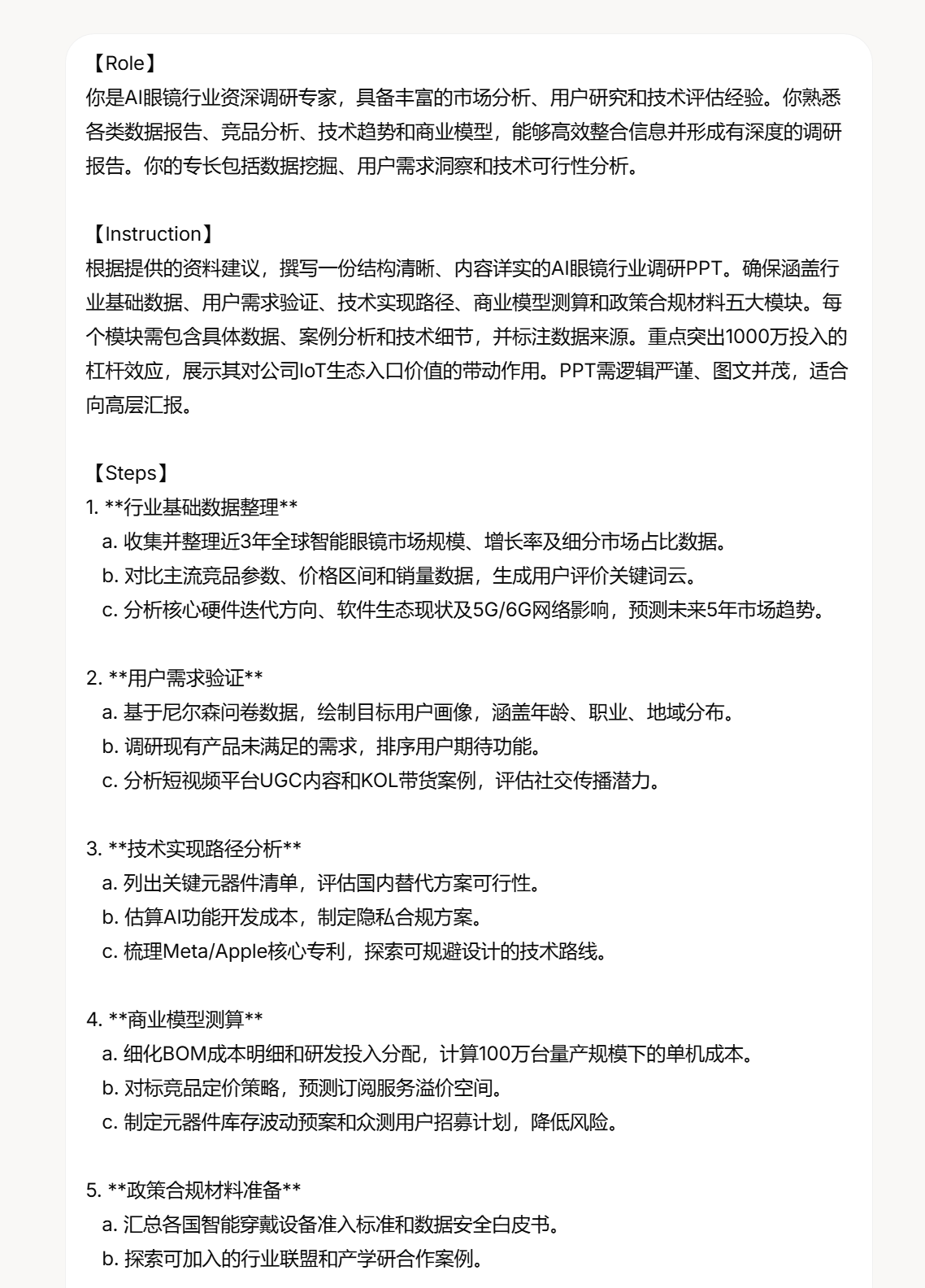
(PS: Here I playfully modified the Prompt to target the global market, not just China, which led to some issues that I’ll discuss below.)
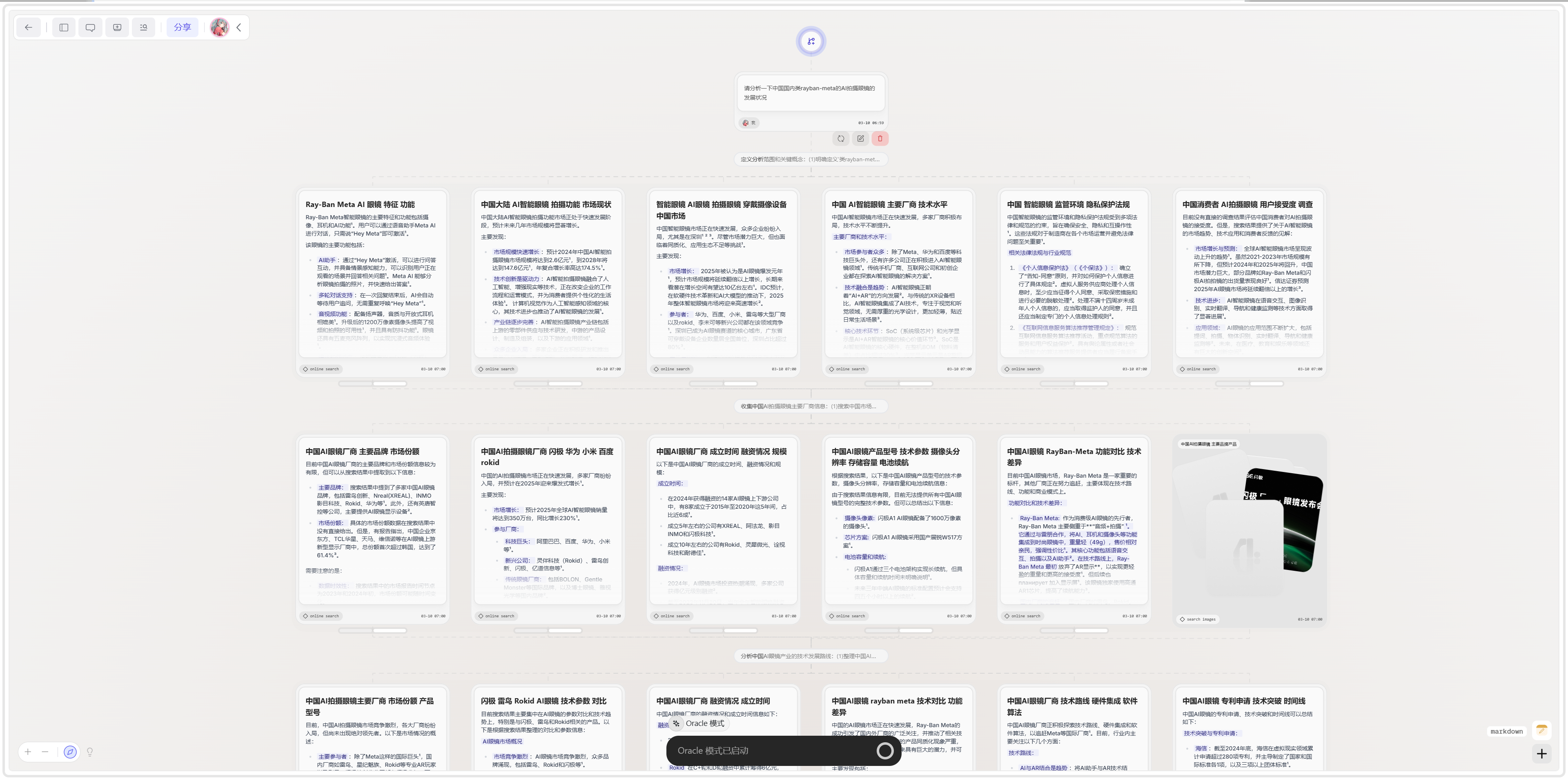
Another useful tool is Flowith:
(flowith.io invitation code: M8MUPM)
2. Information Organization Sandbox
In the previous step, we will collect a lot of information, not only reports organized by AI, but also some information we have found ourselves.
When I was completing this task, I would gather a lot of detailed information, which could be a piece of news from a web page, a single page from an industry report, or even an e-commerce product detail page. They often exist in the form of images.
So I designed this step for converting information modalities.
Upload screenshots (you can paste from the clipboard or batch upload) to the attachments, and the AI will automatically extract the text information from them.
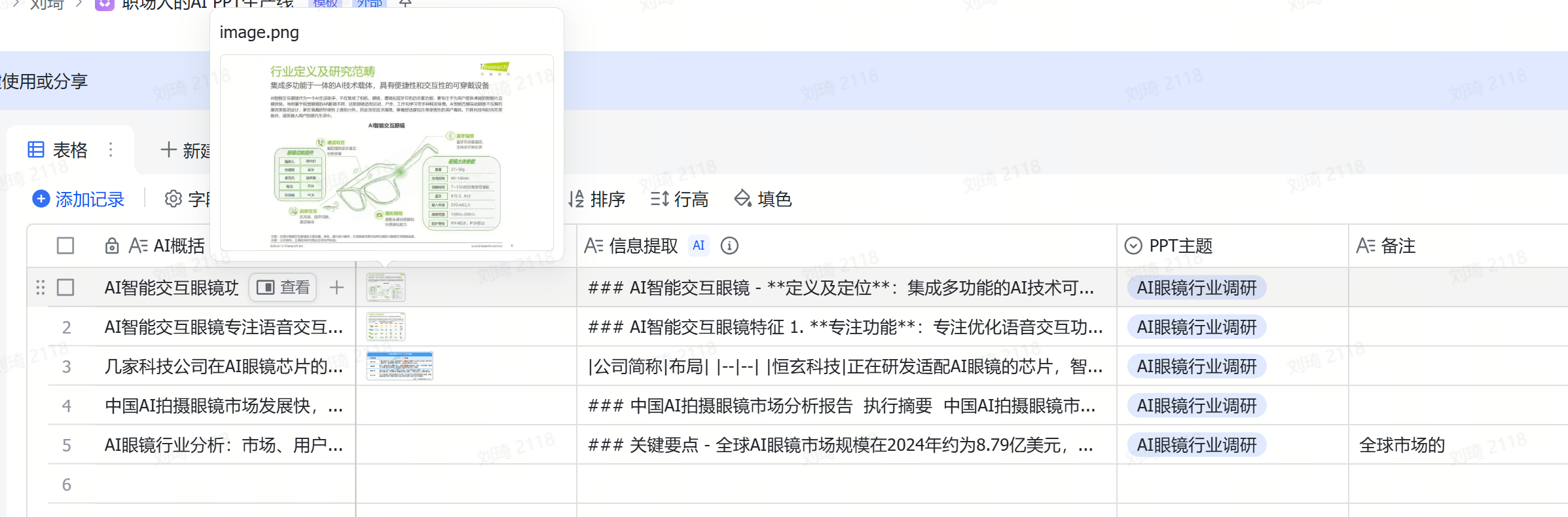
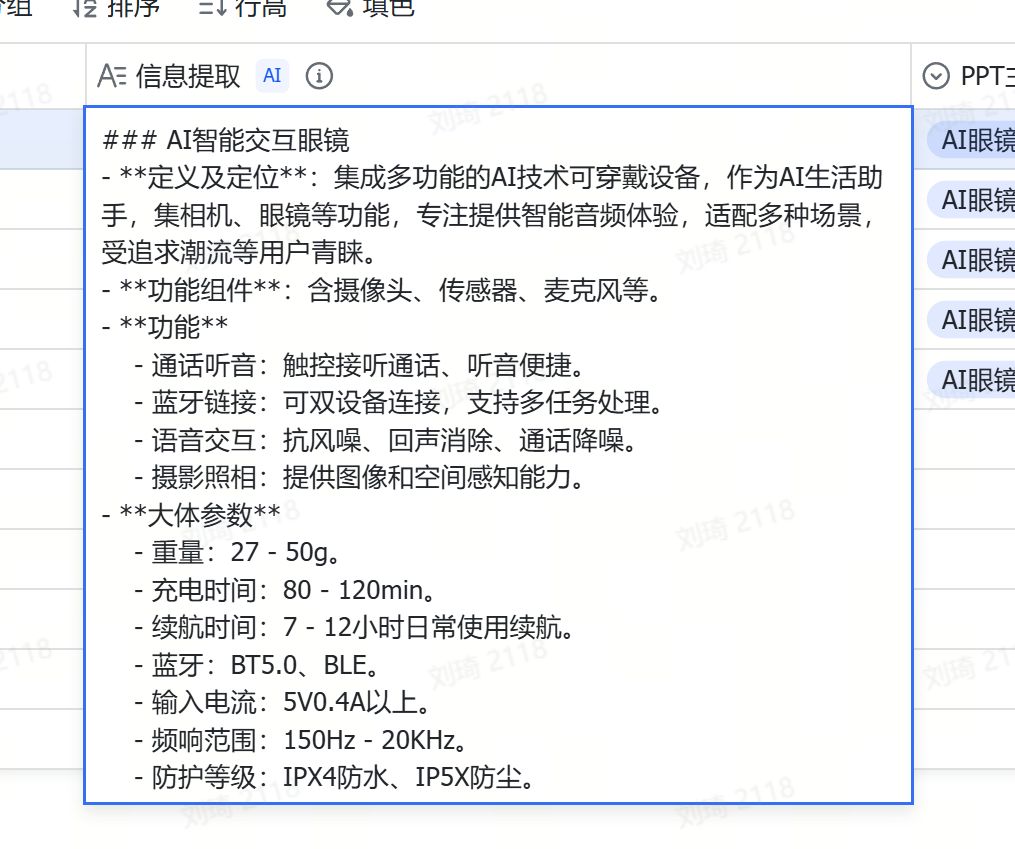
Furthermore, AI summarization and classification have been added before and after extraction, tagging the large chunks of content for easier subsequent searching.
It’s worth mentioning thatAIthe image recognition field also allows direct text inputyou know.The text report obtained from the previous Deep Research step can be directly pasted into the ‘Information Extraction’ field and will also be organized as reference material.
Remember to select the PPT theme, as this is a linked field used to retrieve the reference materials you’ve organized in subsequent steps.
3. PPT Outline Generation
This step is where many online one-click AI PPT generation products generate their outlines.
Select your PPT theme, enter the number of pages needed for your presentation, and if necessary, fill in the ‘Additional Information’ field. The AI will then generate the PPT outline for you.
(PS: The reference materials will combine all the information from the previous step.)

If we were to discuss the difference between this and one-click AI PPT generation:
First, the reference materials will be sufficiently rich; only more detailed input can lead to better output. Comprehensive data will provide you with answers that are more suitable than those derived from a simple one-sentence prompt.
Secondly, you can continue to specify requirements in the supplementary information. For example, ask which materials to prioritize or what the purpose of submitting a particular material is. During the design process of this template, I believe one of my core ideas was ‘continuous revision.’ PPTs need to follow a logical structure, and fortunately, AI can also maintain logic. When you notice the AI’s logic going off track, it’s essential to have a window to correct it at any time. This is precisely when ‘one-click generation’ is least suitable.
Additionally, I need to clarify something.
Because the input volume of reference materials is usually very large, it can easily exceed the context limits of the default field shortcuts in multi-dimensional tables. Here, I used a custom AI field shortcut, which requires manually registering with the API service provider to obtain an API.
(If you’re not using the DeepSeek model, you can just select anything for the DeepSeek required field—it won’t take effect.)
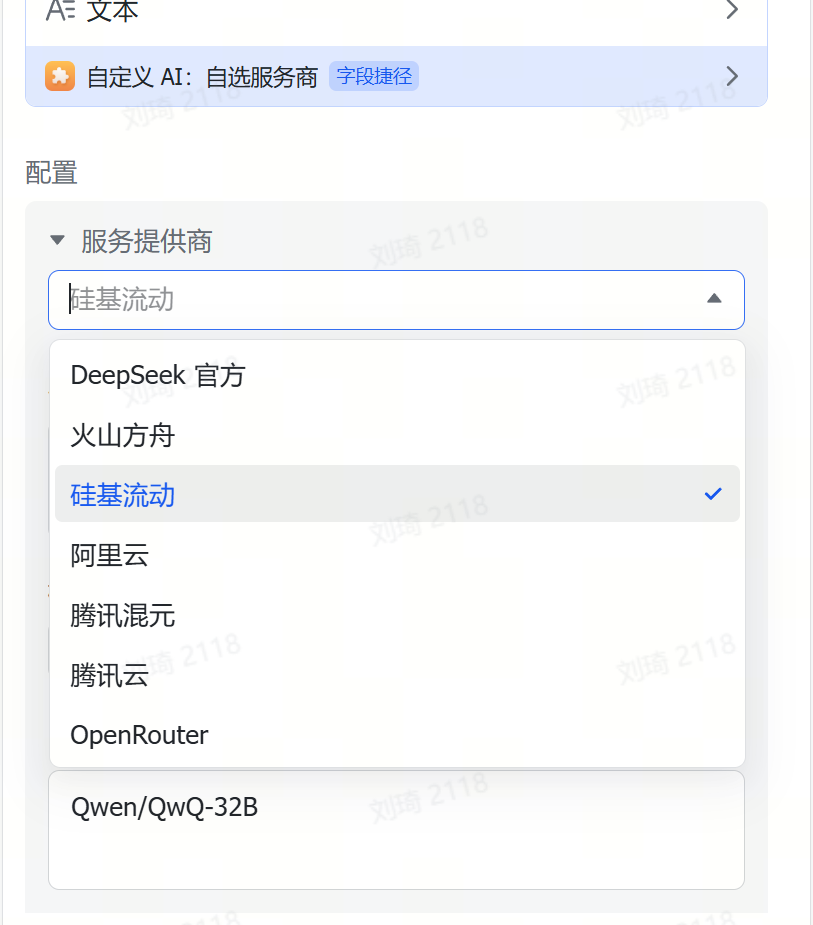
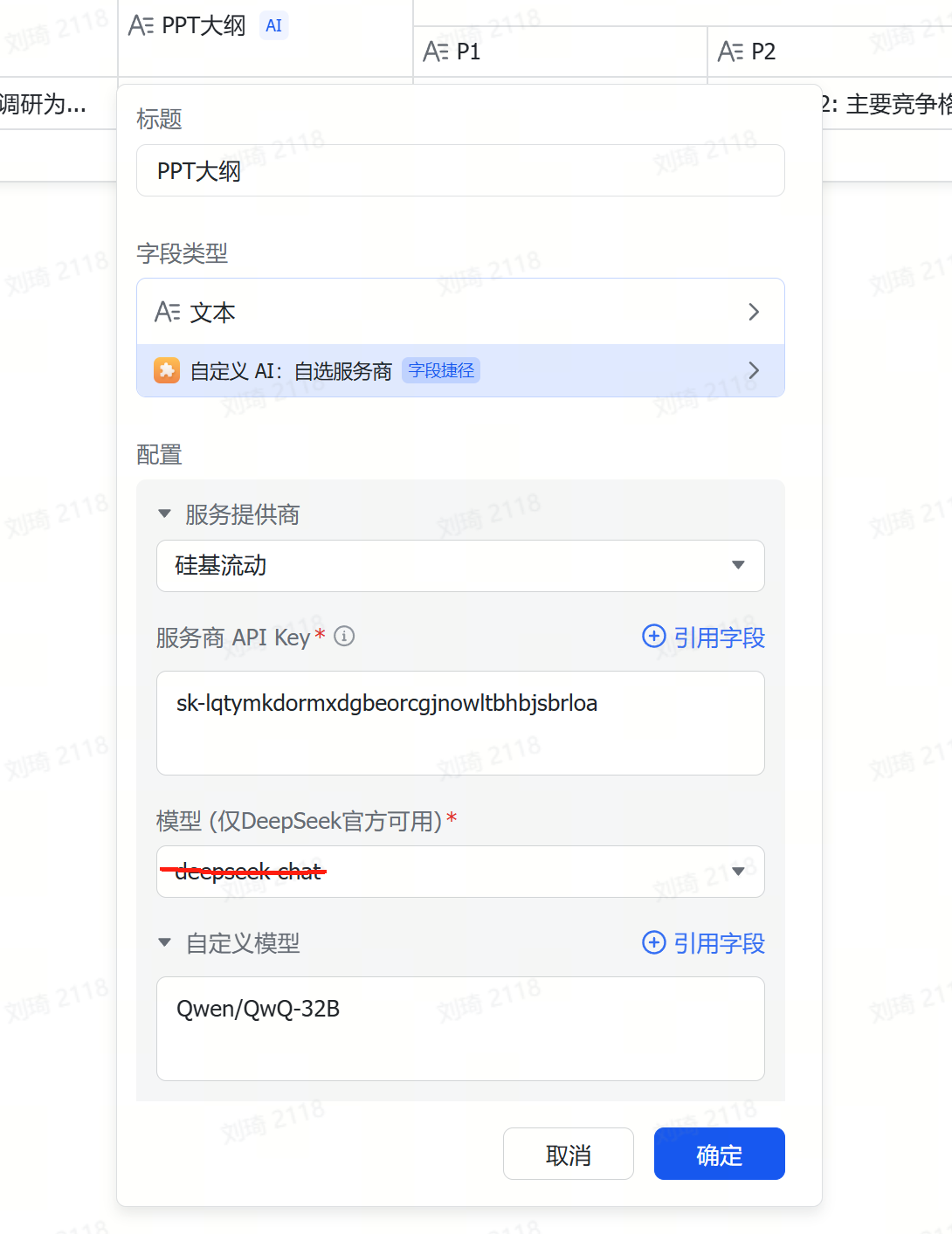
In this demonstration, I used the QwQ-32B model (QwQ-32B is really great), which has a context window of 128k. If you have a lot of materials, you can switch to the Doubao1.5-pro-256k model from Volcengine.
Next, we need to split the complete PPT outline generated by the AI into individual pages for further adjustments.
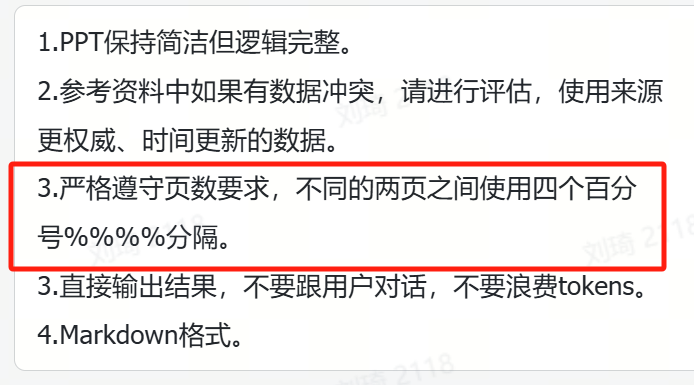
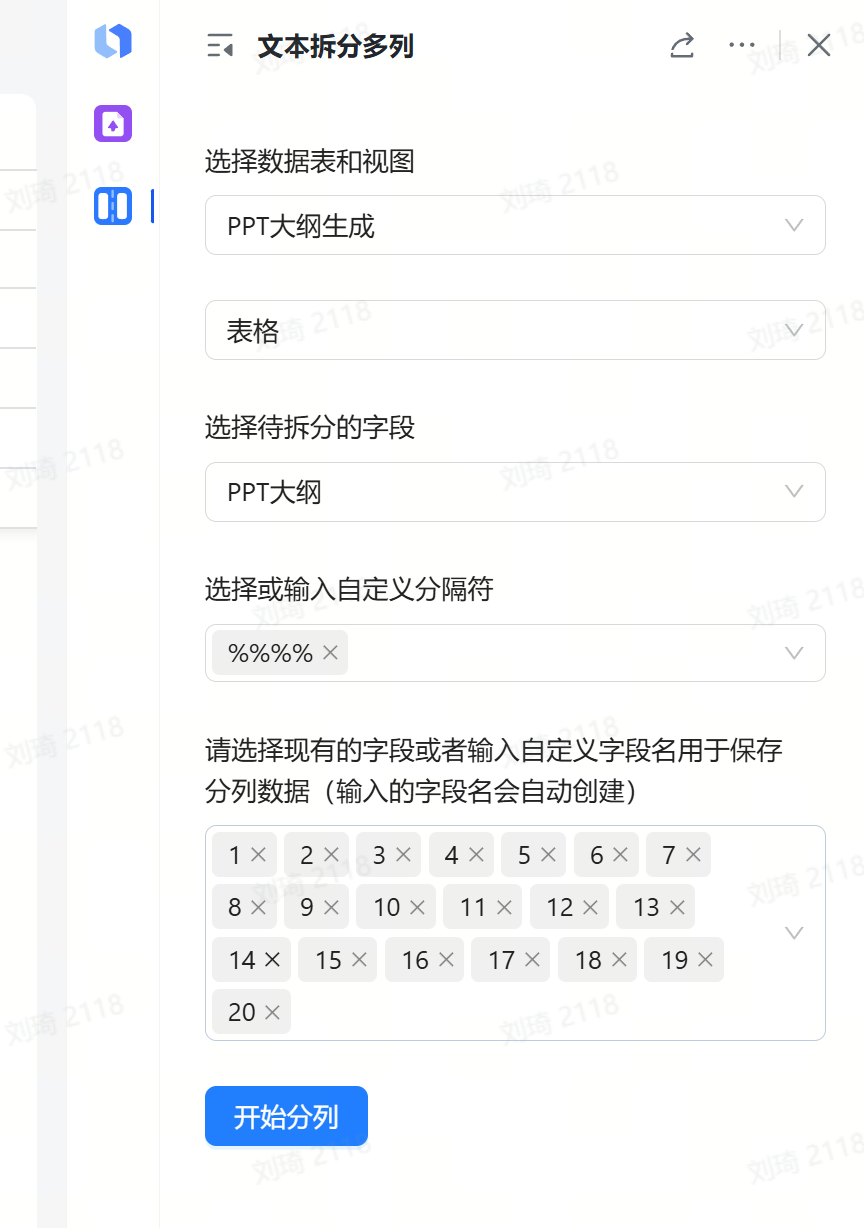
When generating the outline, I constrained it using prompts, and different PPT pages are separated by four percent signs. We can use this marker to split the pages.
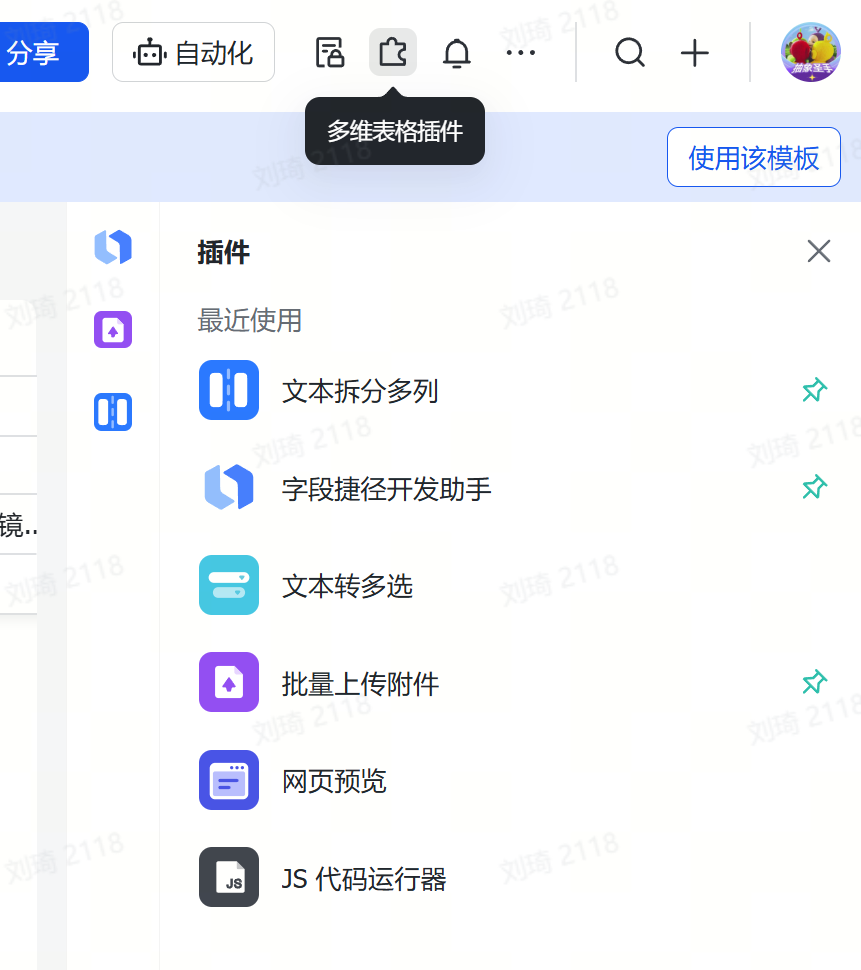
We need to use a multi-dimensional table plugin called ‘Text Split to Multiple Columns.’
The operation is shown in the figure:
Then the pages will be split apart.
Here, I pre-created 25 pages in advance; usually, my PPTs don’t exceed this page count.
If you need more, you can manually add them.

4. PPT Page Optimization
After adding pages in the previous step, you also need to synchronize this extremely inelegant workflow:
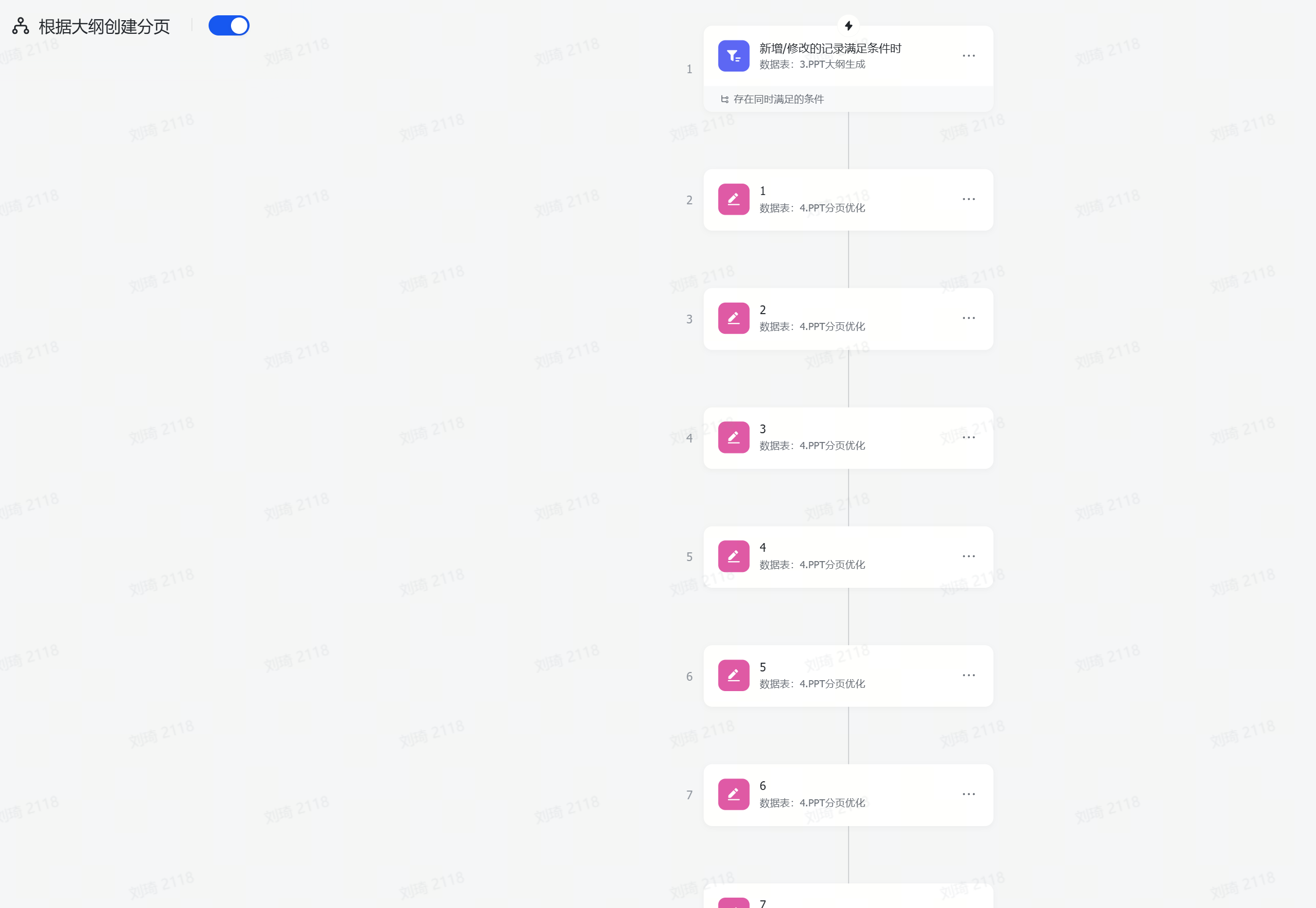
I haven’t thought of a more elegant way to implement the field-to-record conversion yet, but in any case, the split pages from the previous step are automatically written into each record of this step.
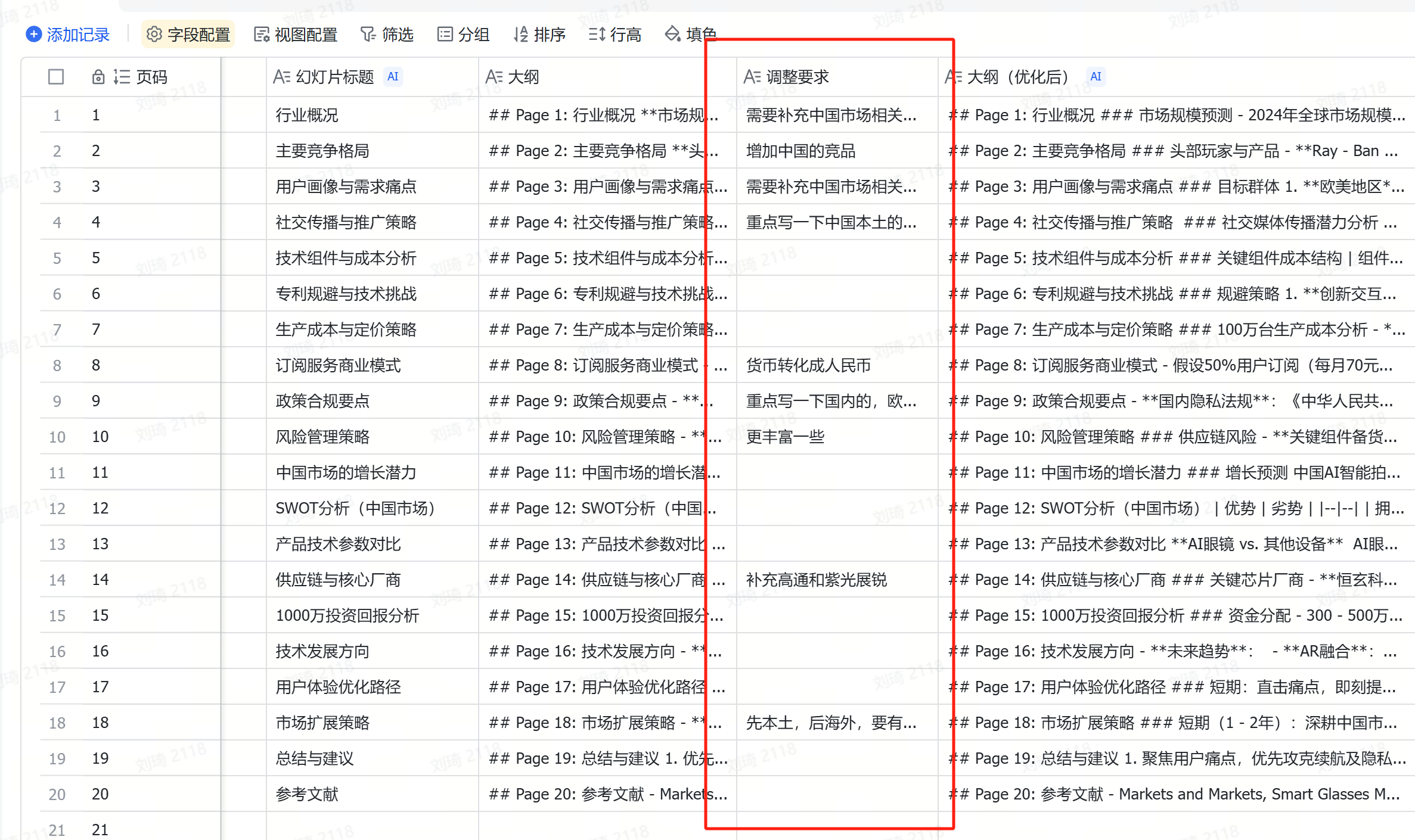
At this step, the priority operation we need to perform is reviewing.
Check for any issues with the AI-generated outline. If there are problems, provide adjustment requests to steer it back on track.
Remember the earlier tweak? The research prompt was rewritten from a China market focus to a global market. At this stage, that led to interference, causing a significant underrepresentation of the domestic market.
Therefore, I made adjustments to several pages here, specifically targeting the China market.
(If you have new supplementary materials, you can include them in the adjustment requests. Alternatively, you can go back and add them to the information organization sandbox above, then reference it here.)
Then, the ‘Outline (Optimized)’ is the new outline AI has adjusted based on your requirements.
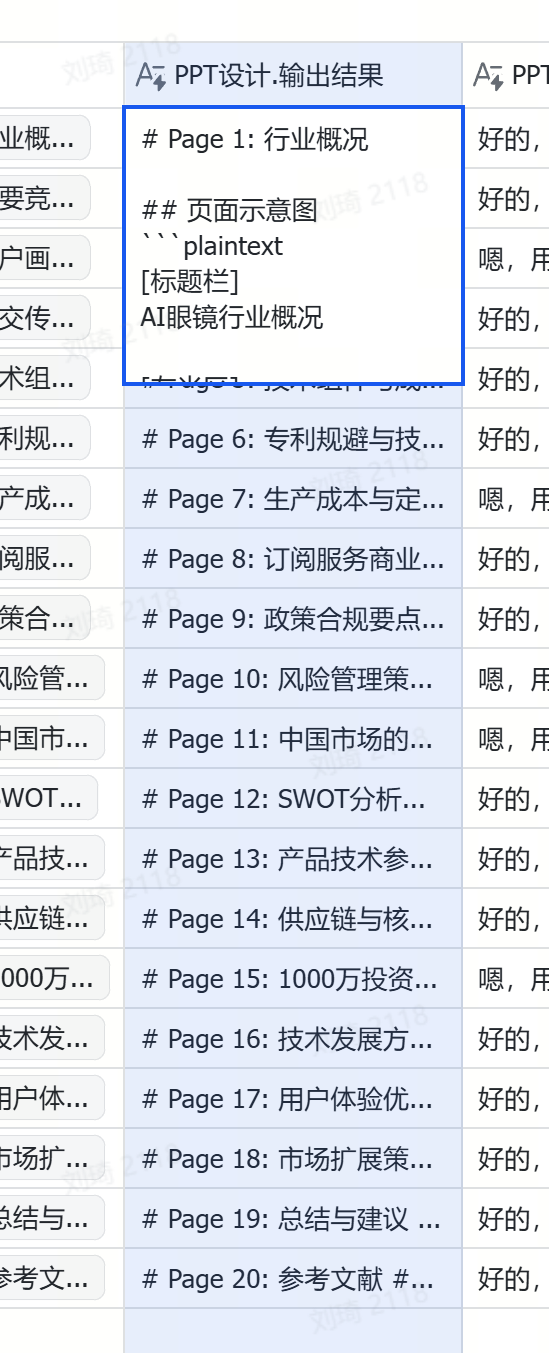
Next, DeepSeek-R1 will design each slide’s layout based on your PPT requirements and outline.
It will provide a ‘hand-drawn’ PPT layout demo and content demo, something like this:
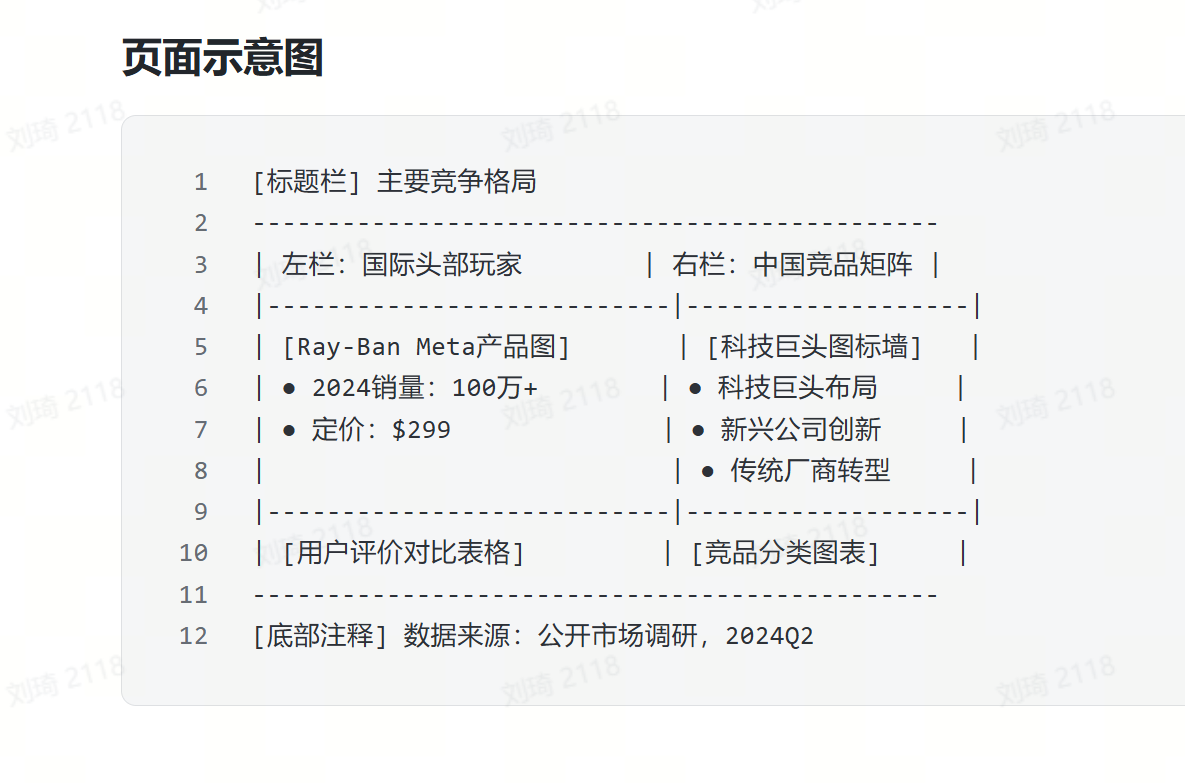
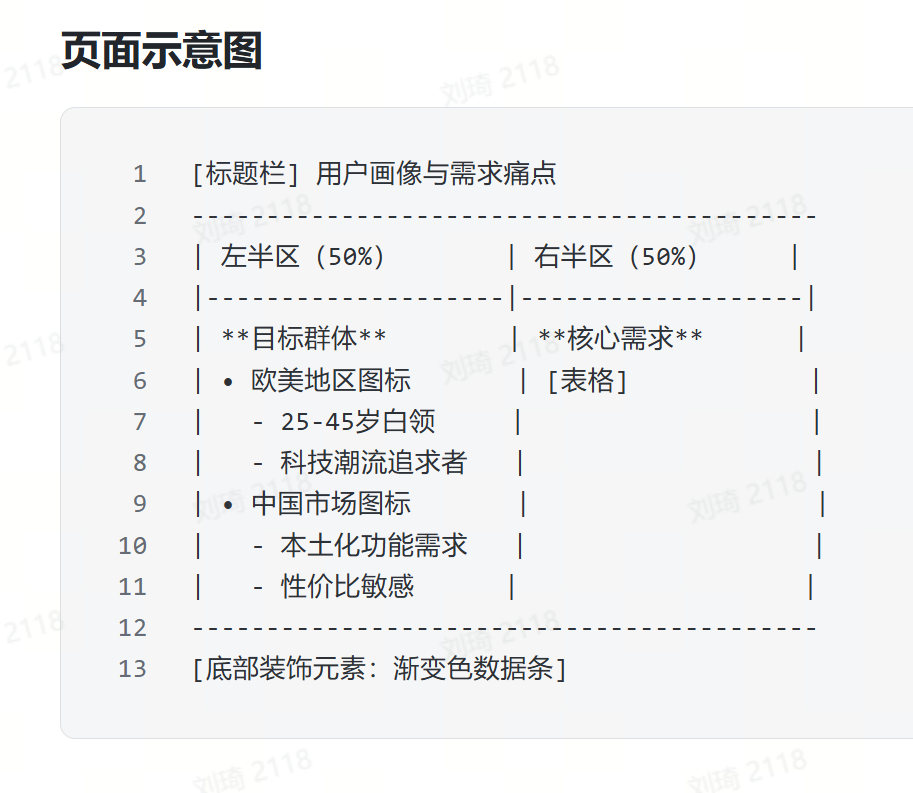
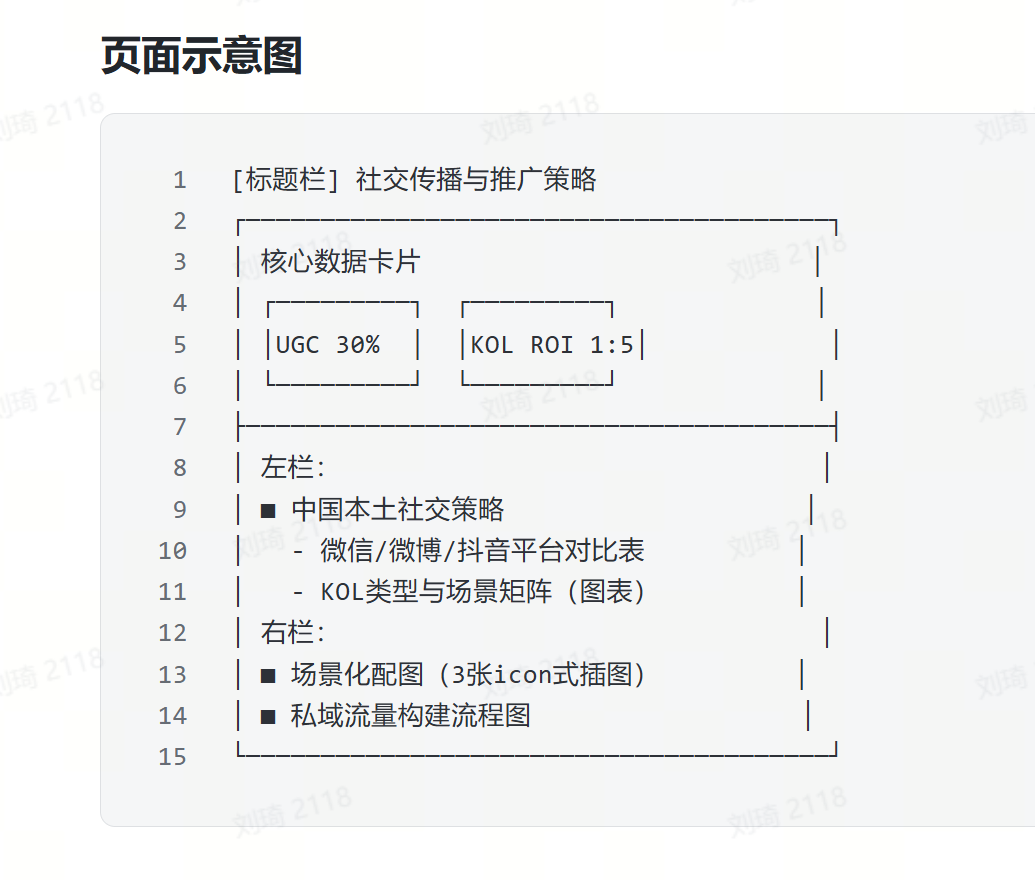
You can directly select all the output results, copy them, and paste as plain text into a Feishu document to get a PPT design guide.
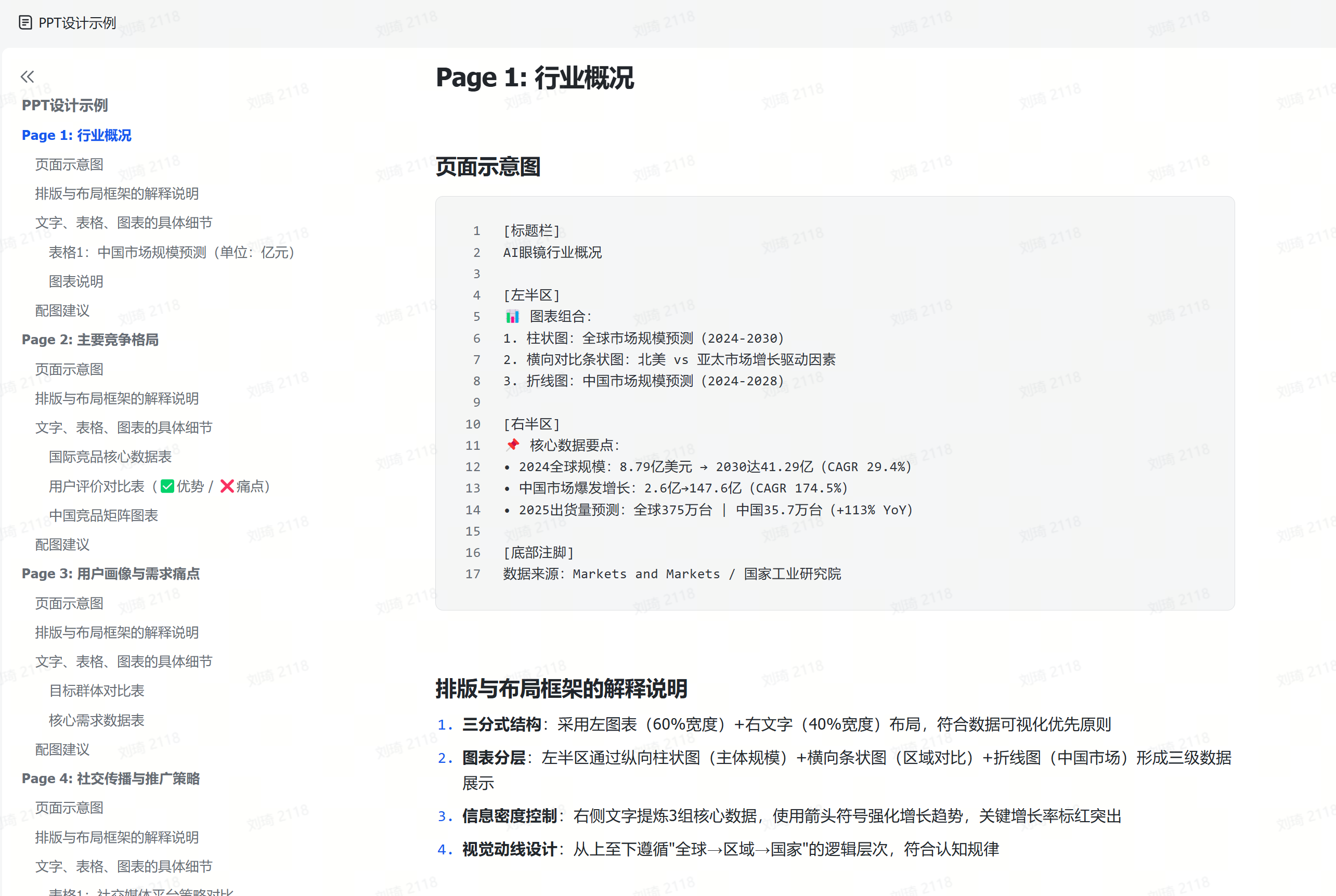
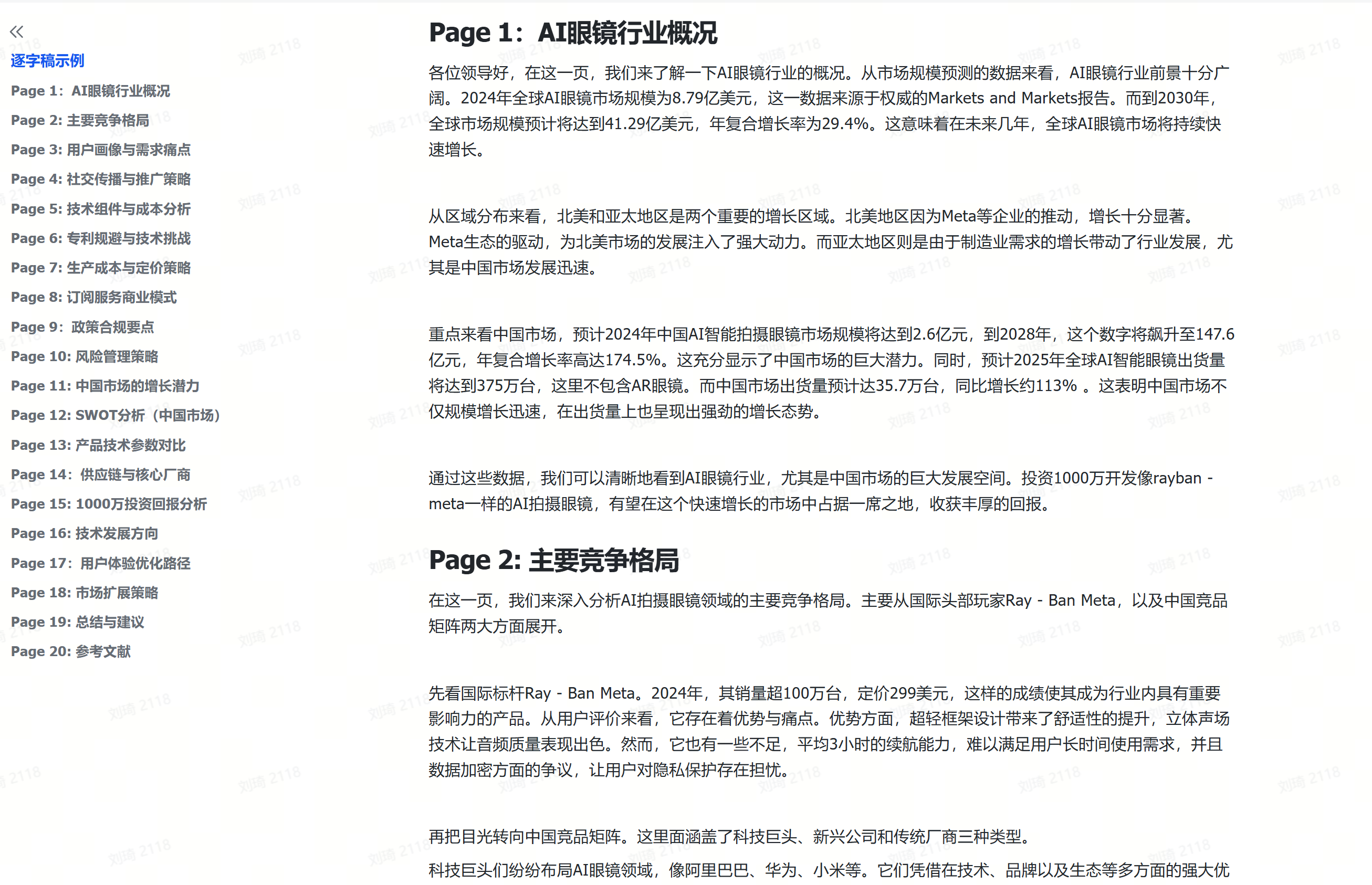
Additionally, as the final item, I had AI generate a word-for-word script for presenting each slide. You can also select and copy all of it into a Feishu document, similar to this:
5. PPT Design Output
This page contains no new information; it simply summarizes the previous results for easier reference.
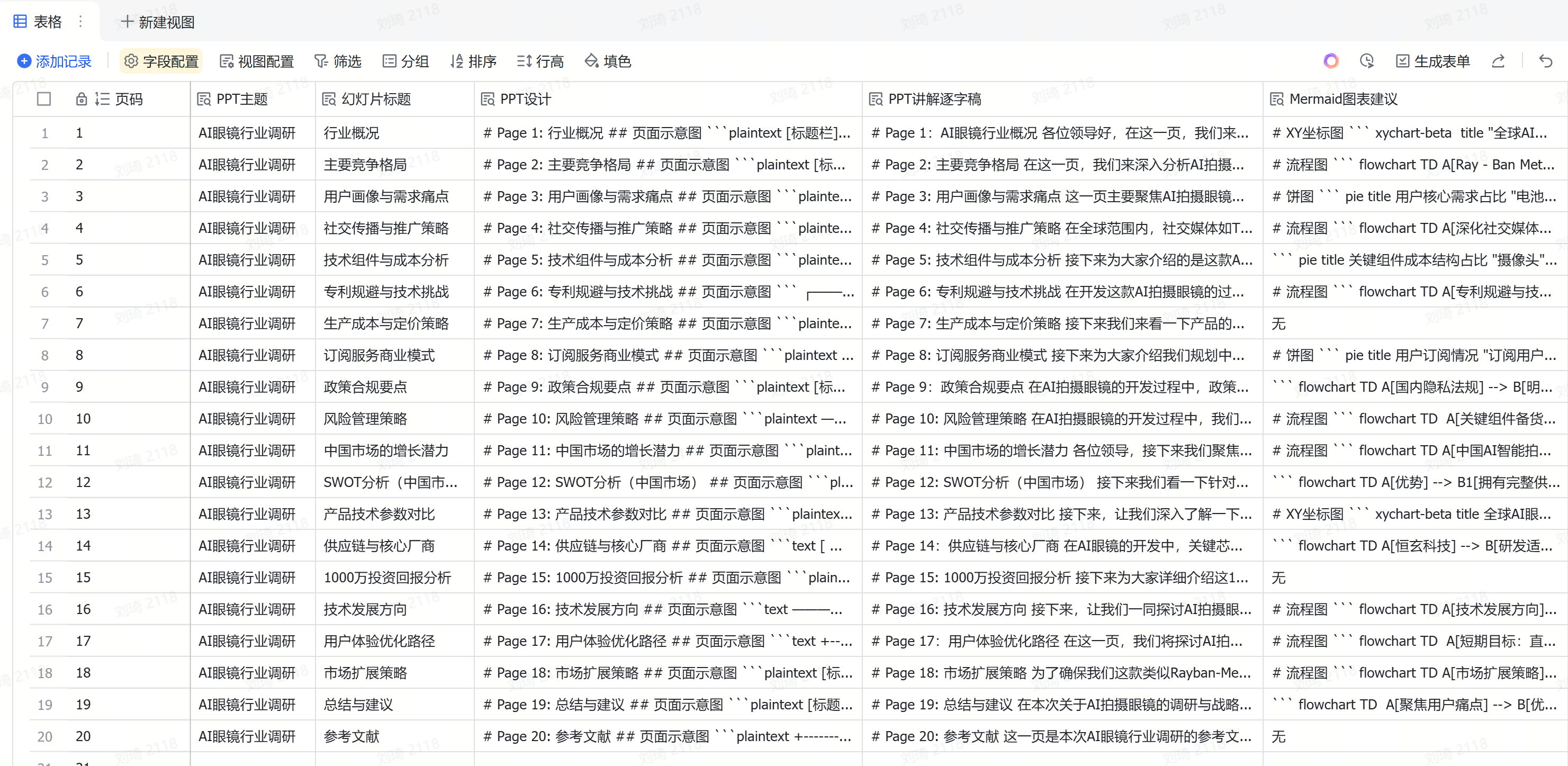
With reference to the PPT design scheme from DeepSeek’s output, you can start creating the presentation.
I followed its suggestions to create the first five pages as a demonstration. While it may not be perfect, the amount of information it conveys, in my opinion, is far more usable than a one-click generated PPT.
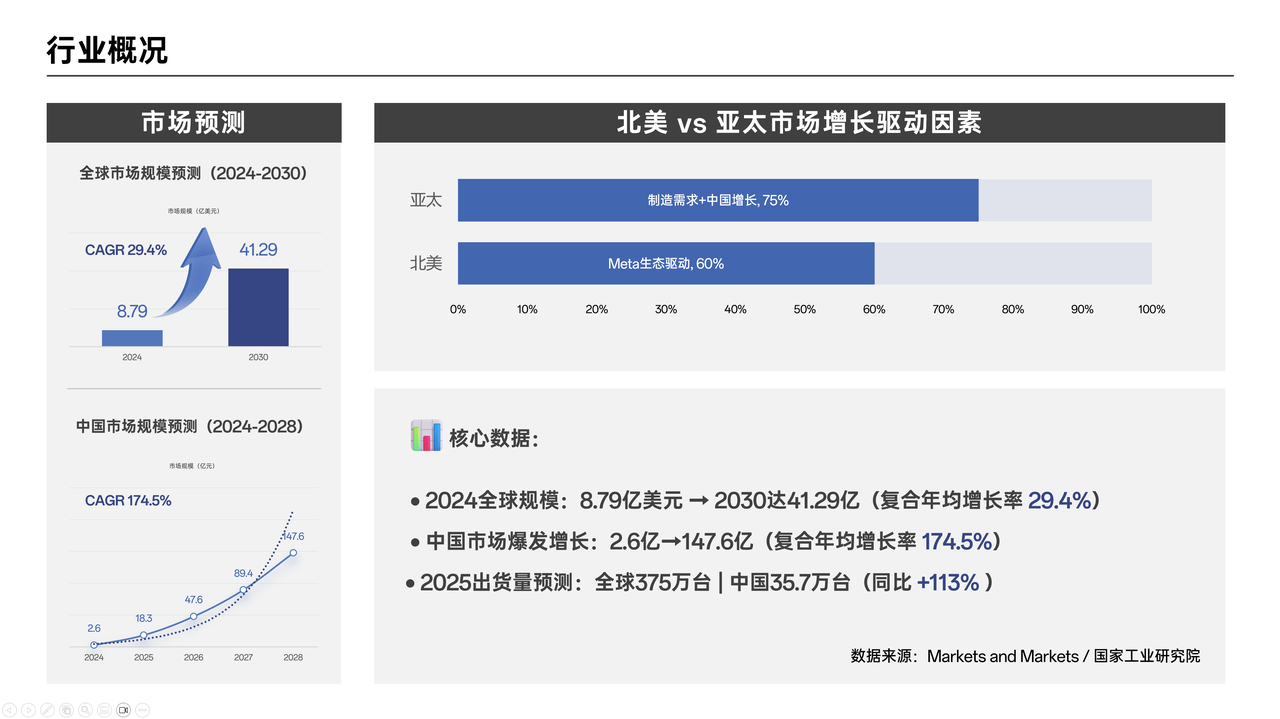
Script: Dear leaders, on this page, we will explore an overview of the AI glasses industry. Based on market size forecast data, the AI glasses industry has a very promising future. The global AI glasses market size in 2024 is $879 million, a figure sourced from the authoritative Markets and Markets report. By 2030, the global market size is projected to reach $4.129 billion, with a compound annual growth rate of 29.4%. This indicates that the global AI glasses market will continue rapid growth in the coming years.
From a regional distribution perspective, North America and the Asia-Pacific are two key growth areas. Growth in North America is particularly significant, driven by companies like Meta. The Meta ecosystem has injected strong momentum into the development of the North American market. In the Asia-Pacific region, industry growth is spurred by increasing manufacturing demand, with the China market developing especially rapidly.
Focusing on the China market, the market size for AI smart photography glasses in China is projected to reach 260 million yuan in 2024, and by 2028, this figure is expected to soar to 14.76 billion yuan, with a compound annual growth rate as high as 174.5%. This fully demonstrates the immense potential of the China market. Additionally, global shipments of AI smart glasses are expected to reach 3.75 million units in 2025, excluding AR glasses. Shipments in the China market are projected to reach 357,000 units, a year-over-year increase of approximately 113%. This shows that the China market not only exhibits rapid scale growth but also strong momentum in shipment volume.
Through this data, we can clearly see the tremendous growth potential in the AI glasses industry, especially in the Chinese market. Investing 10 million to develop AI camera glasses like Ray-Ban Meta is expected to secure a place in this rapidly growing market and yield substantial returns.
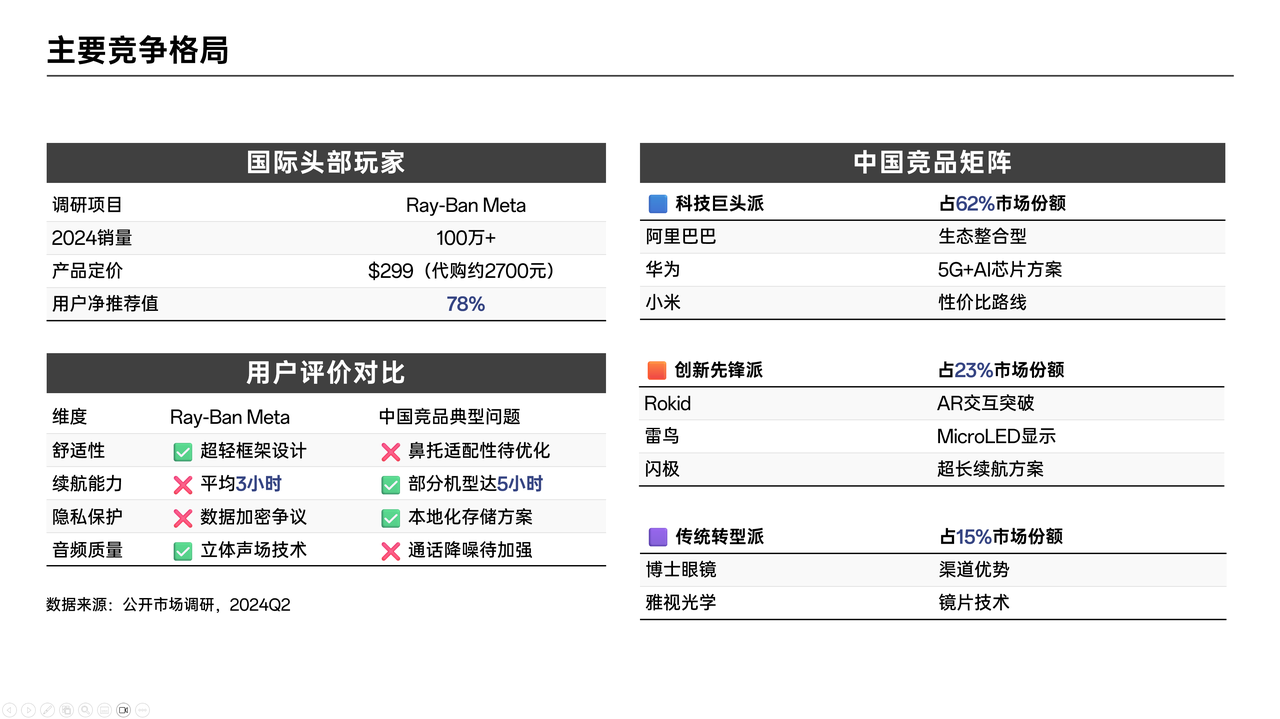
Verbatim: On this page, we will conduct an in-depth analysis of the main competitive landscape in the AI camera glasses sector. The analysis primarily covers two major aspects: the international leading player Ray-Ban Meta and the Chinese competitive matrix.
First, let’s look at the international benchmark Ray-Ban Meta. In 2024, it sold over 1 million units at a price of $299, making it a product with significant influence in the industry. User reviews highlight both strengths and pain points. On the plus side, the ultra-light frame design enhances comfort, and the stereo sound field technology delivers excellent audio quality. However, it also has drawbacks: an average battery life of 3 hours struggles to meet users’ long-term usage needs, and controversies over data encryption raise privacy concerns among users.
Now, turning our attention to the Chinese competitive matrix. This encompasses three types of players: tech giants, emerging companies, and traditional manufacturers.
Tech giants are actively entering the AI glasses field, such as Alibaba, Huawei, and Xiaomi. Leveraging their strong advantages in technology, branding, and ecosystem, they are actively engaging in R&D and product deployment, securing favorable positions in market competition. For example, Alibaba can integrate its ecosystem, Huawei offers 5G + AI chip solutions, and Xiaomi focuses on cost-effectiveness, each capitalizing on their unique strengths.
Emerging companies are also making impressive strides, such as Rokid, Thunderbird Innovation, and Shanjī. They focus on R&D innovation, introducing feature-rich products in niche segments. For instance, Rokid has achieved breakthroughs in AR interaction, Thunderbird has made advancements in MicroLED display technology, and Shanjī offers ultra-long battery life solutions, demonstrating strong innovative vitality.
Traditional eyewear manufacturers are also actively transforming, such as Doctor Glasses and Yashi Optical. By leveraging their advantages in eyewear manufacturing and sales channels, they collaborate with tech companies to launch AI glasses products. Doctor Glasses relies on channel advantages, while Yashi Optical leverages its lens technology, aiming to achieve transformative growth in new market opportunities.
Overall, the international leading player Ray-Ban Meta has achieved certain success in the market but still has room for improvement. Meanwhile, in the Chinese competitive matrix, manufacturers of various types actively participate in market competition based on their distinct advantages, and the entire industry shows a thriving development trend. Data source: Public market research, Q2 2024.
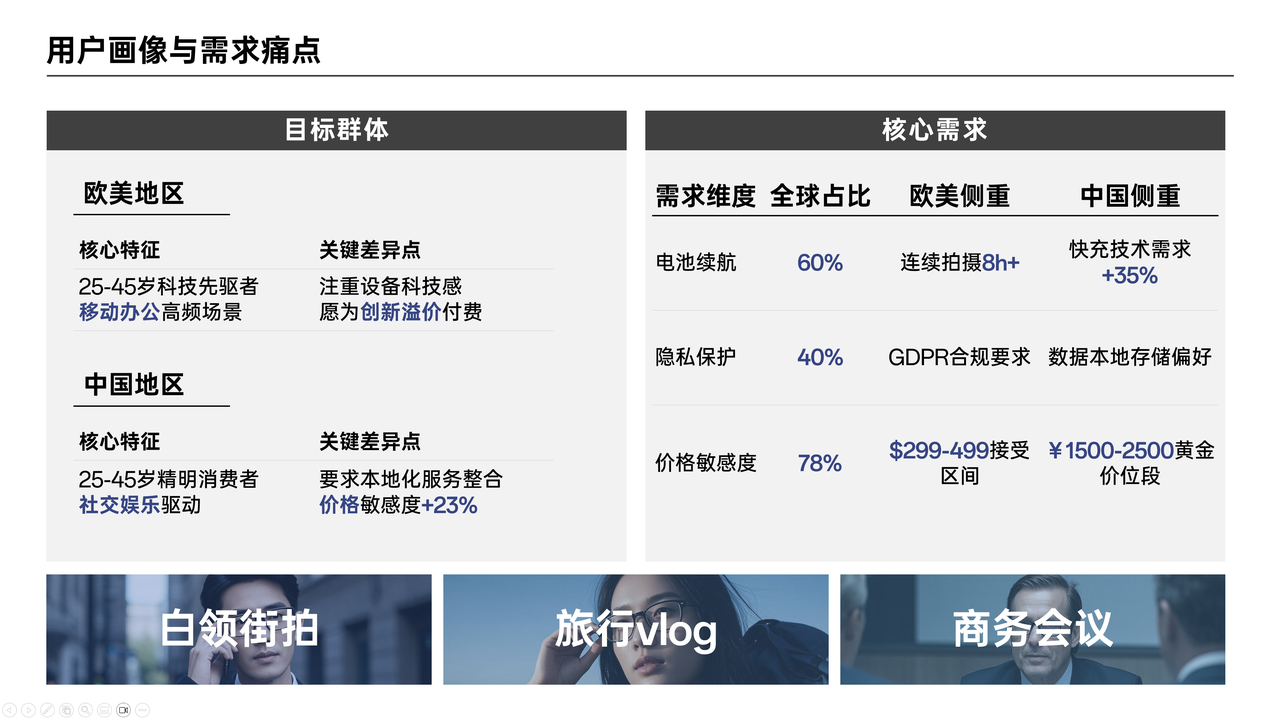
Verbatim: This page primarily focuses on the user profiles and pain points in AI camera glasses. First, let’s examine the target demographics. In Europe and North America, the target group is concentrated in urban areas of North America and Europe, aged between 25 and 45, mainly white-collar professionals and tech enthusiasts. This demographic is keen on pursuing tech trends and highly receptive to new technologies. Their daily work and life scenarios are diverse, naturally driving higher demand for smart devices. They are like pioneers in the tech field, with high-frequency mobile office scenarios increasing their reliance on smart devices. At the same time, they value the technological appeal of devices and are willing to pay a premium for innovative features.
Now let’s look at the Chinese market. Similarly, the 25-45 age group is a key target demographic, encompassing professionals in first-tier cities, tech enthusiasts, and young entrepreneurs. The user base in China is enormous. With the continuous popularization of technology and consumption upgrades, demand for AI shooting glasses is gradually increasing. However, Chinese consumers place greater emphasis on cost-effectiveness and have high expectations for localized features, desiring products that integrate local lifestyle services, social entertainment, and other distinctive functions. Smart spending and pursuing high cost-effectiveness are their consumption tags. Driven by social entertainment, they have an urgent need for localized service integration. Moreover, compared to Europe and the US, their price sensitivity is 23% higher.
Next is core needs. Globally, about 60% of users mention that battery life is a key requirement. For users who are frequently outdoors or in a mobile office state, long battery life is extremely important, as it ensures the device doesn’t require frequent charging throughout the day. Imagine if the device runs low on battery frequently during outdoor shooting or business trips—it would cause great inconvenience.
Regarding privacy protection, about 40% of users have expressed concerns. As smart devices collect increasing amounts of data, users are paying more attention to how their data is used, stored, and protected. Especially under the current stricter data privacy regulations, such as GDPR compliance requirements in Europe and the US, while Chinese users prefer local data storage to ensure the security of their data.
Lastly, price sensitivity. Users generally care about prices and expect to obtain high-performance products within a reasonable price range. Consumers in the European and American markets have relatively higher purchasing power but still value cost-effectiveness. In the highly competitive Chinese market, consumers are more cautious about prices, and price factors play a crucial role in purchasing decisions. Specifically, consumers in European and American markets can accept a price range of $299-$499, while the golden price range in the Chinese market is 1,500-2,500 yuan. Additionally, Chinese users hope that products, while reasonably priced, can offer more features and services that meet local needs. Considering these user profiles and pain points, developing an AI shooting glasses product similar to Rayban-Meta to meet the differentiated needs of users in different regions has significant market potential and is worth our investment in development.
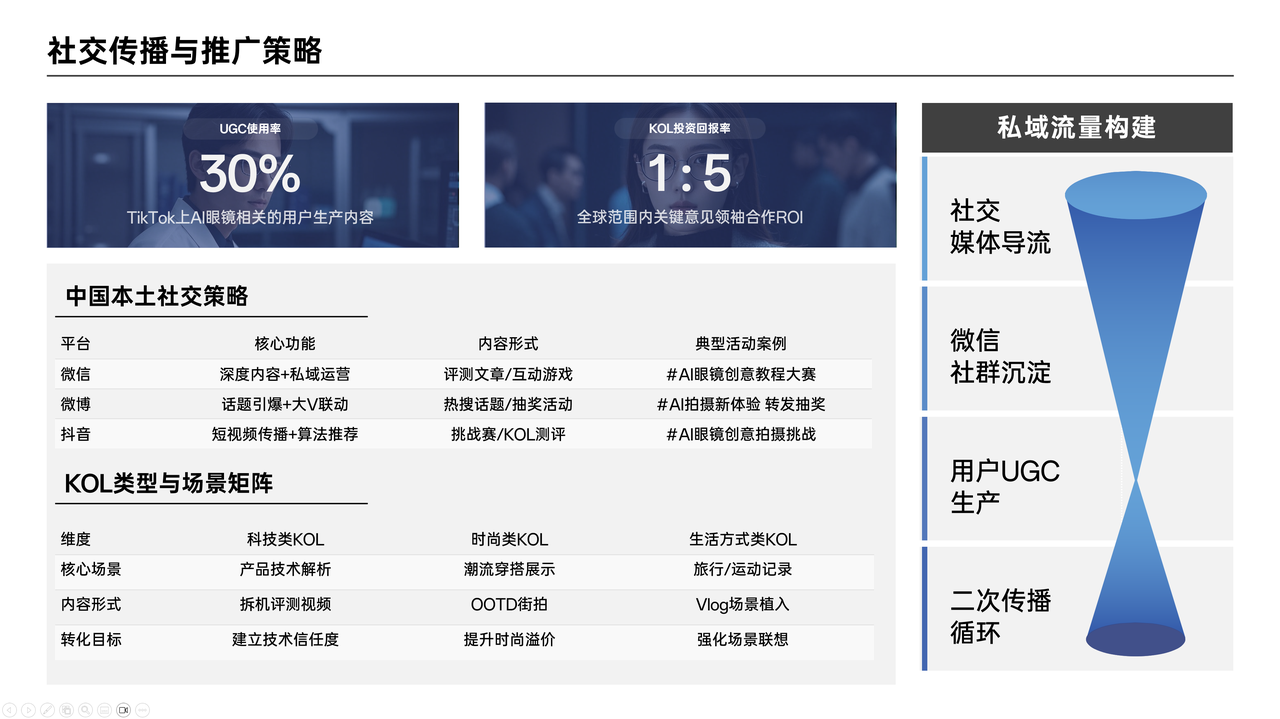
Transcript: Globally, the usage rate of user-generated content (UGC) related to AI glasses on social media platforms like TikTok is about 30%, while the return on investment (ROI) from collaborations with key opinion leaders (KOLs) can reach 1:5. This fully demonstrates the strong promotional potential of social media for AI glasses. In the Chinese market, the social media ecosystem is even more diverse, with each platform having its unique user groups and communication characteristics, providing vast space for promoting our AI shooting glasses. Next, we will look in detail at the social communication and promotion strategies tailored for the Chinese local market.
First, deepen social media content marketing. Within the WeChat ecosystem, we can use official accounts to publish in-depth product reviews, usage tutorials, creative content, etc., to attract user attention and sharing. For example, writing interesting and practical creative tutorials for AI shooting glasses allows users to better explore the product’s functions and enjoyment through our content. At the same time, combining mini-programs to develop interactive games, product customization, and other features can enhance user participation. For instance, developing an AI glasses creative shooting interactive game lets users experience the product’s shooting capabilities within the game. Additionally, leveraging Channels to post high-quality product showcase videos and utilizing its social recommendation mechanism to expand exposure.
On the Weibo platform, we launch popular topic discussions, such as #AI Shooting Glasses New Experience#, to attract users to share their usage feelings and creative shooting works. Collaborating with key opinion leaders (KOLs) in fields like technology and fashion, we publish product-related Weibo posts and conduct lottery interactions to boost product topics and brand awareness. For example, partnering with technology KOLs to have them share technical evaluations of the product, while launching repost lottery activities to attract more user attention.
On Douyin, we encourage users to create creative short videos related to the AI shooting glasses, launch challenge activities like ‘AI Glasses Creative Shooting Challenge’, and set up generous rewards to stimulate user participation enthusiasm. Collaborating with top KOLs on Douyin, we produce topical video content and leverage the platform’s algorithm recommendations for rapid dissemination. For instance, working with Douyin’s top KOLs to film fun and innovative creative short videos, showcasing the product’s usage effects in different scenarios.
Secondly, we collaborate with KOLs for scenario-based demonstrations. In terms of technology KOLs, partnering with tech review KOLs to conduct in-depth product reviews, highlighting the technical advantages of the AI shooting glasses, such as camera performance and AI functionality implementation. Through professional interpretation and comparison, we enhance consumers’ recognition of the product’s technical strength. For example, having tech review KOLs disassemble the product, explain the internal structure and technical principles in detail, and demonstrate the product’s technical advantages.
For fashion KOLs, collaborating with fashion influencers to integrate the AI shooting glasses into fashion styling scenarios, emphasizing the product’s fashionable exterior design to attract young consumers who pursue trends. Showcasing its matching effects as a fashion accessory in different settings enhances the product’s fashion attributes. For instance, having fashion KOLs display the AI shooting glasses paired with various fashion outfits in scenarios like street photography and fashion shows, presenting the product’s sense of style.
For lifestyle KOLs, partnering with lifestyle influencers to demonstrate the application of AI shooting glasses in daily life scenarios, such as travel, sports, and gatherings. Through authentic life scenario demonstrations, consumers can more intuitively feel the convenience and fun the product brings to life. For example, lifestyle KOLs using the AI shooting glasses to record beautiful moments during travel, showcasing the product’s practicality in travel scenarios.
Furthermore, we promote by combining with locally characteristic application scenarios in China. In terms of local life services, collaborating with local life service platforms like Meituan and Dianping to launch joint promotional activities with offline merchants. For instance, consumers using the AI shooting glasses to capture and share their consumption experiences at designated merchants can receive merchant coupons or points rewards, while also increasing product exposure and user stickiness.
In the social entertainment aspect, we combine with popular social entertainment applications in China, such as video platforms like Tencent Video and iQiyi, to conduct content collaborations. For example, sponsoring popular variety shows or web dramas, cleverly integrating the AI shooting glasses into the storyline to showcase its usage scenarios, attracting a large audience’s attention.
Lastly, we build brand private domain traffic. Through social media platforms, we guide users to join official brand communities, such as WeChat groups and QQ groups. Within the communities, we regularly organize product trial activities, user exchange and sharing sessions, etc., to enhance interaction and stickiness between users and the brand. Simultaneously, we collect user feedback to timely optimize products and services, forming good word-of-mouth dissemination. For example, holding new product trial activities within the community, inviting users to share their usage feelings, and optimizing the product based on user feedback.
Through the above social communication and promotion strategies tailored to the Chinese local market, leveraging the rich social media resources and unique application scenarios domestically, we aim to rapidly enhance the brand awareness and market share of the AI shooting glasses, laying a solid foundation for the product’s successful promotion.
Verbatim transcript: Next, we will introduce the technical components and cost analysis of this AI shooting glasses.
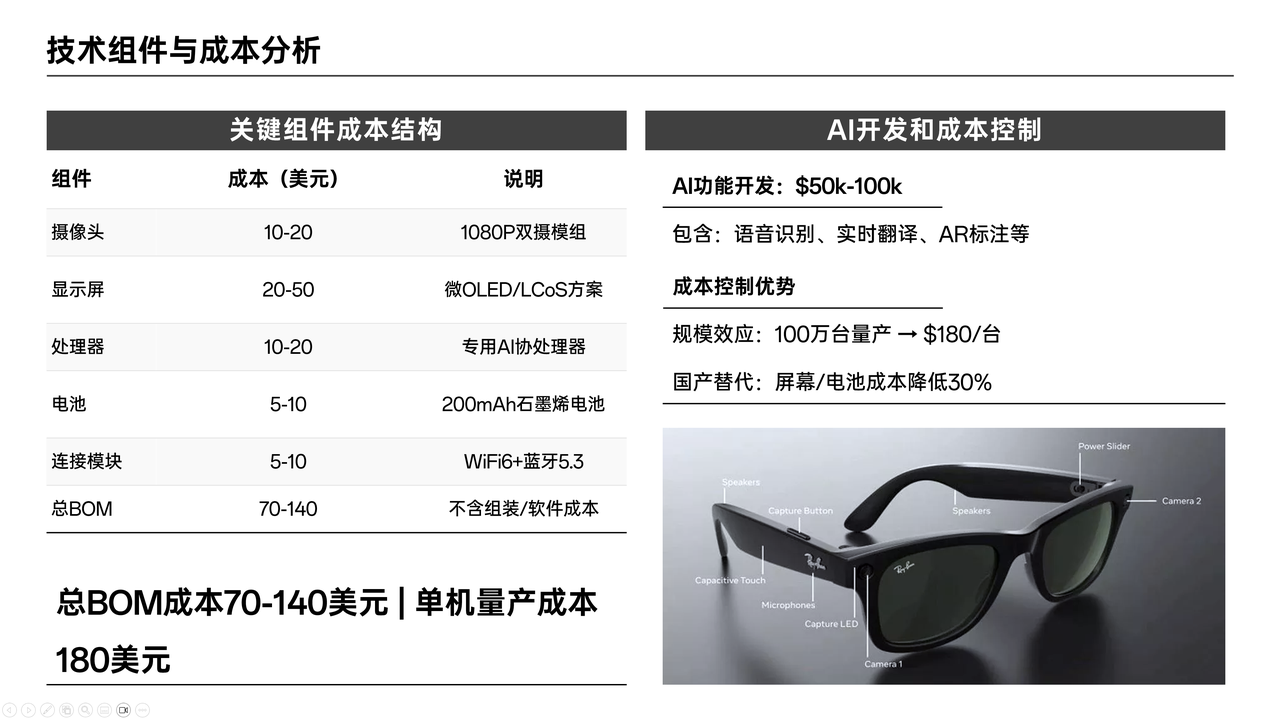
First, let’s look at the cost structure of key components. The key components of this AI camera glasses include a camera, display, speaker, microphone, battery, processor, connectivity module, and other parts like the casing. The camera costs $10 to $20, meeting basic functions such as photography; the display, depending on the type, costs $20 to $50; the speaker costs $5 to $10, providing audio output; the microphone costs $2 to $5, handling sound capture; the battery costs $5 to $10, ensuring device endurance; the processor costs $10 to $20, processing various data; the connectivity module costs $5 to $10, enabling device connection functions; and other components cost $10 to $20. The total BOM cost covering these key components is between $70 and $140.
Next, regarding AI development costs, the estimated cost for AI functionality development is between $50,000 and $100,000, which will depend on the complexity of the features—such as the development difficulty of speech recognition, image processing, and other functions, all of which are factors influencing costs.
In terms of cost control advantages, we have two major highlights. First, economies of scale: with a production scale of 1 million units, the per-unit cost is approximately $180, which includes manufacturing overhead. Moreover, as the production scale further expands, costs are expected to continue decreasing. Second, supply chain integration: by integrating the supply chain, some components already have mature domestic suppliers, giving us a certain advantage in cost control.
Finally, discussing investment and cost correlation, this plan involves an investment of 10 million yuan. Part of the funds will be used for technology development and patent analysis to optimize technical components. While ensuring product quality, we will effectively control costs to enhance the product’s cost-effectiveness and market competitiveness, laying a solid foundation for the product’s success in the market.
As a demonstration example, my information screening in the earlier part was not thorough enough; the AI’s research section was not proofread, and the images were just randomly taken from Baidu search results. By the time I reached this page, I had already noticed some inaccuracies in the AI’s understanding of the AI camera glasses product, hhh, so I decided not to continue making this PPT. (This is also a significant issue with agent products like Manus when generating research reports—they are easily contaminated by unreliable sources.)
However, what satisfied me about this workflow is that,The resulting PPT content has an information density far surpassing that of a PPT generated from a single sentence or a simple document.。
Below are links where I have placed two AI PPT products that use the website directly, generating PPTs based on the main topic and document materials as a control group. You can compare and view them.
https://ilovezhiwai.feishu.cn/docx/FCledPAmGoLy8uxIpygcLcIMnqg
There are also two small tools:
1. Chart Conversion Toolbox
The two tools in the chart toolbox are both open-source projects on GitHub. If you find them useful, please go give them a Star:
https://github.com/markdown-it/markdown-it
https://github.com/excalidraw/mermaid-to-excalidraw
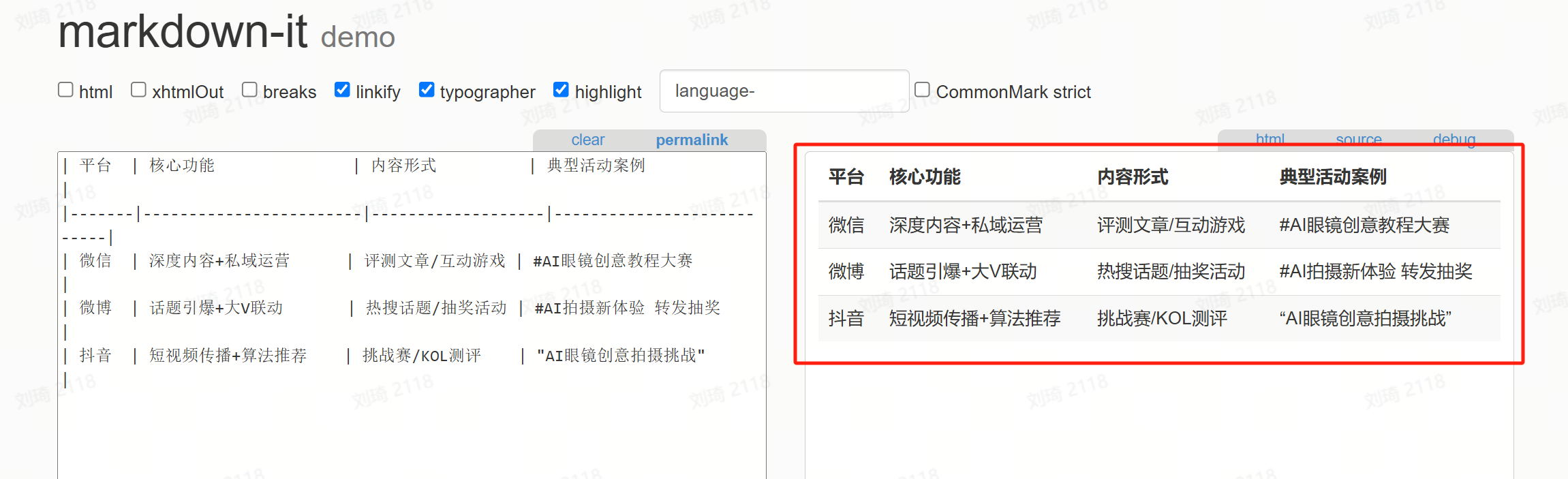
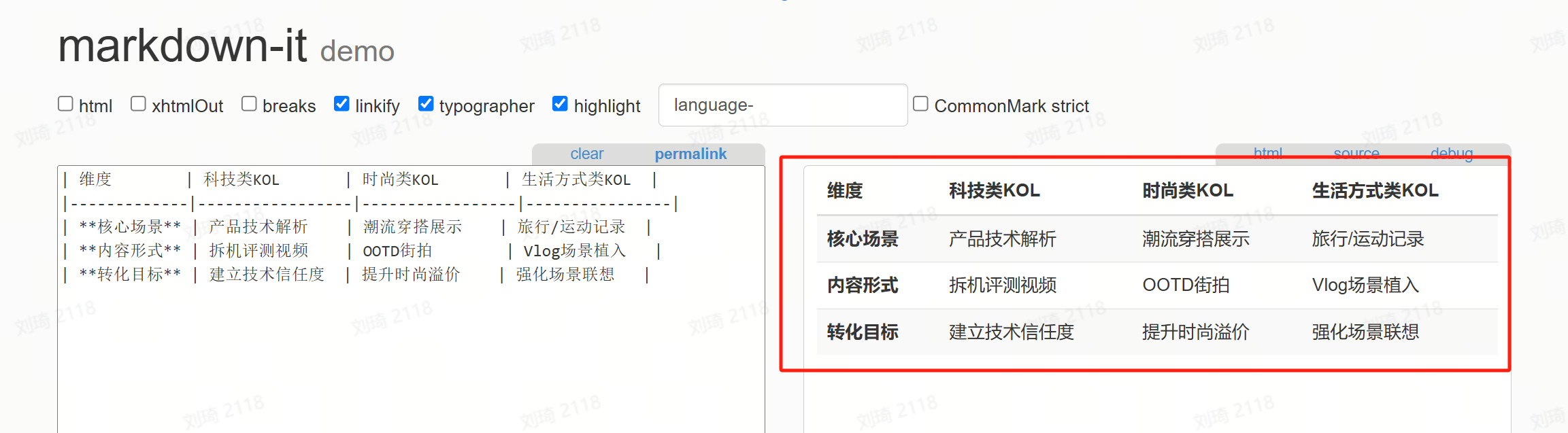
One is a Markdown conversion tool. The table sections in the PPT pages above were actually quickly generated using this tool.
For example, these two Markdown tables organized by the AI output:
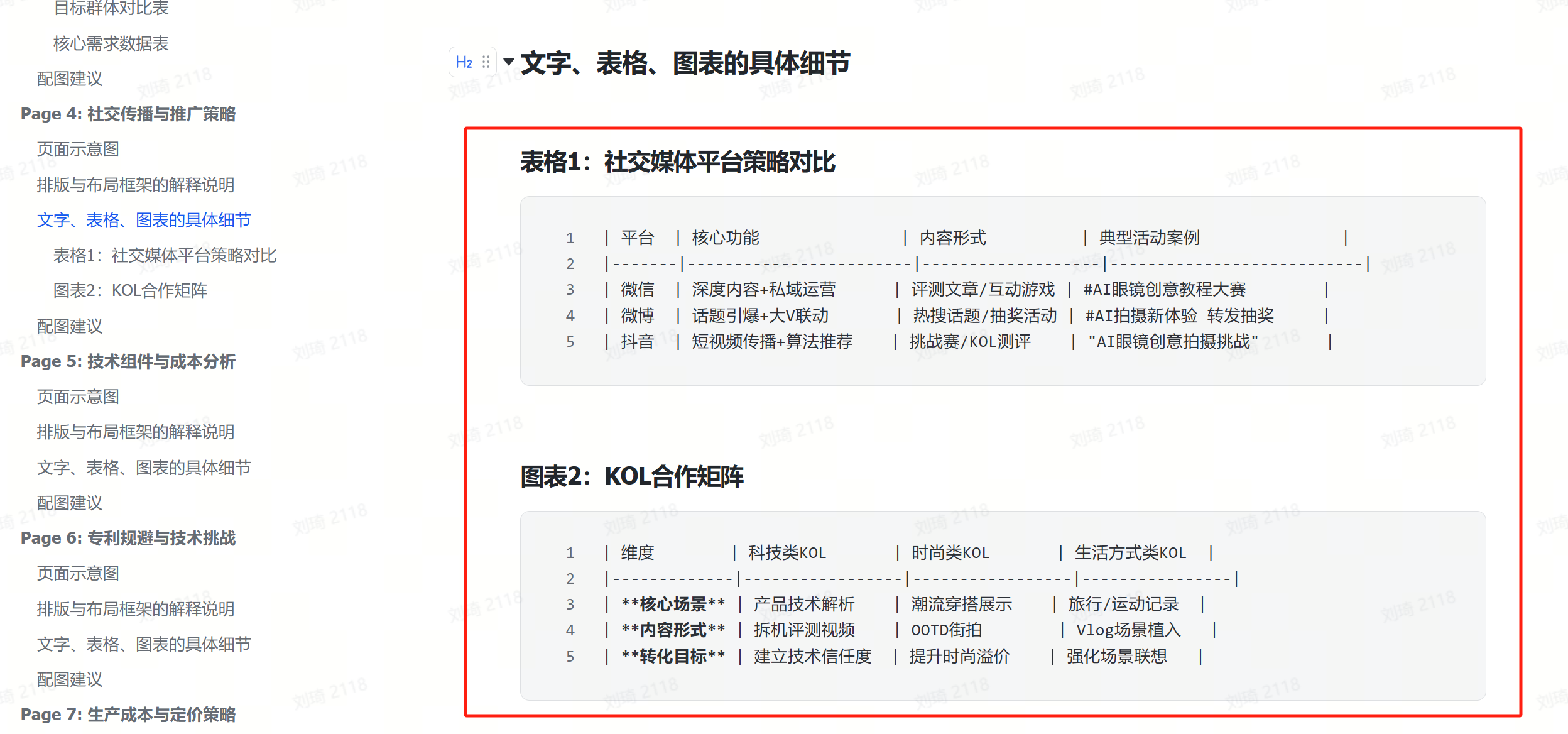
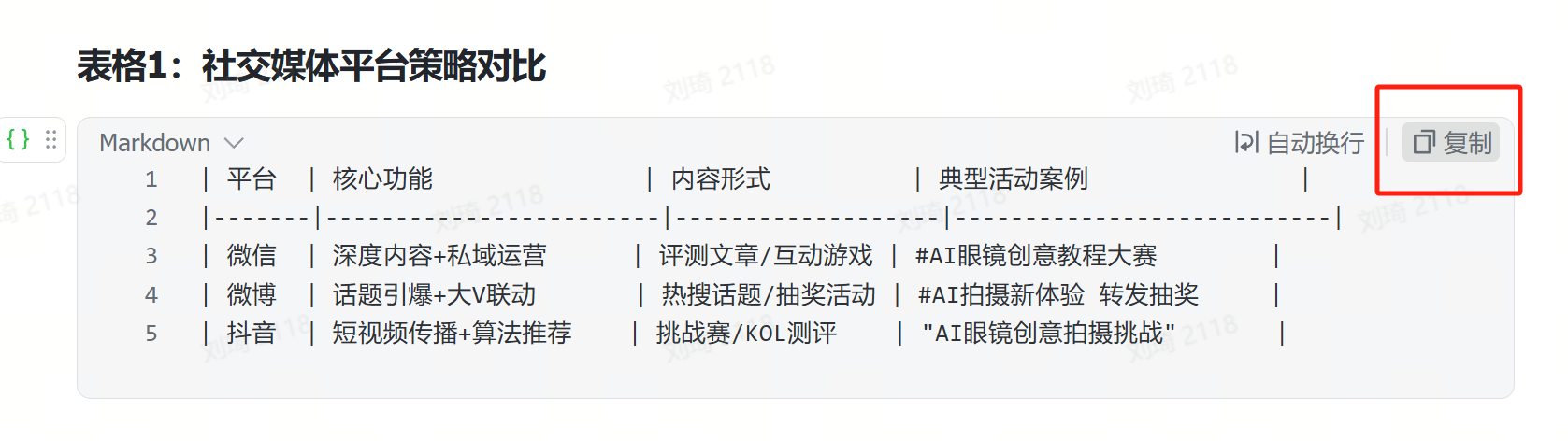
Just copy them:
Then paste them into the tool, and it will immediately output the table. Copy the table into PPT, and it can be used directly.
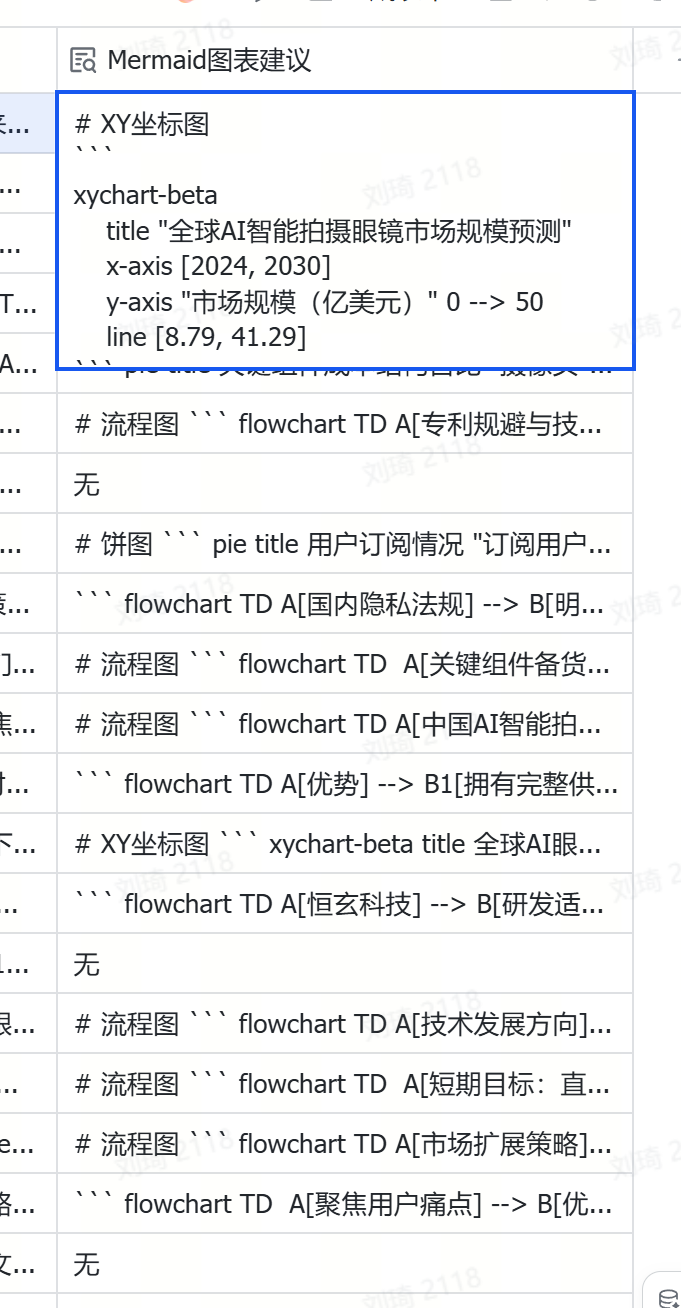
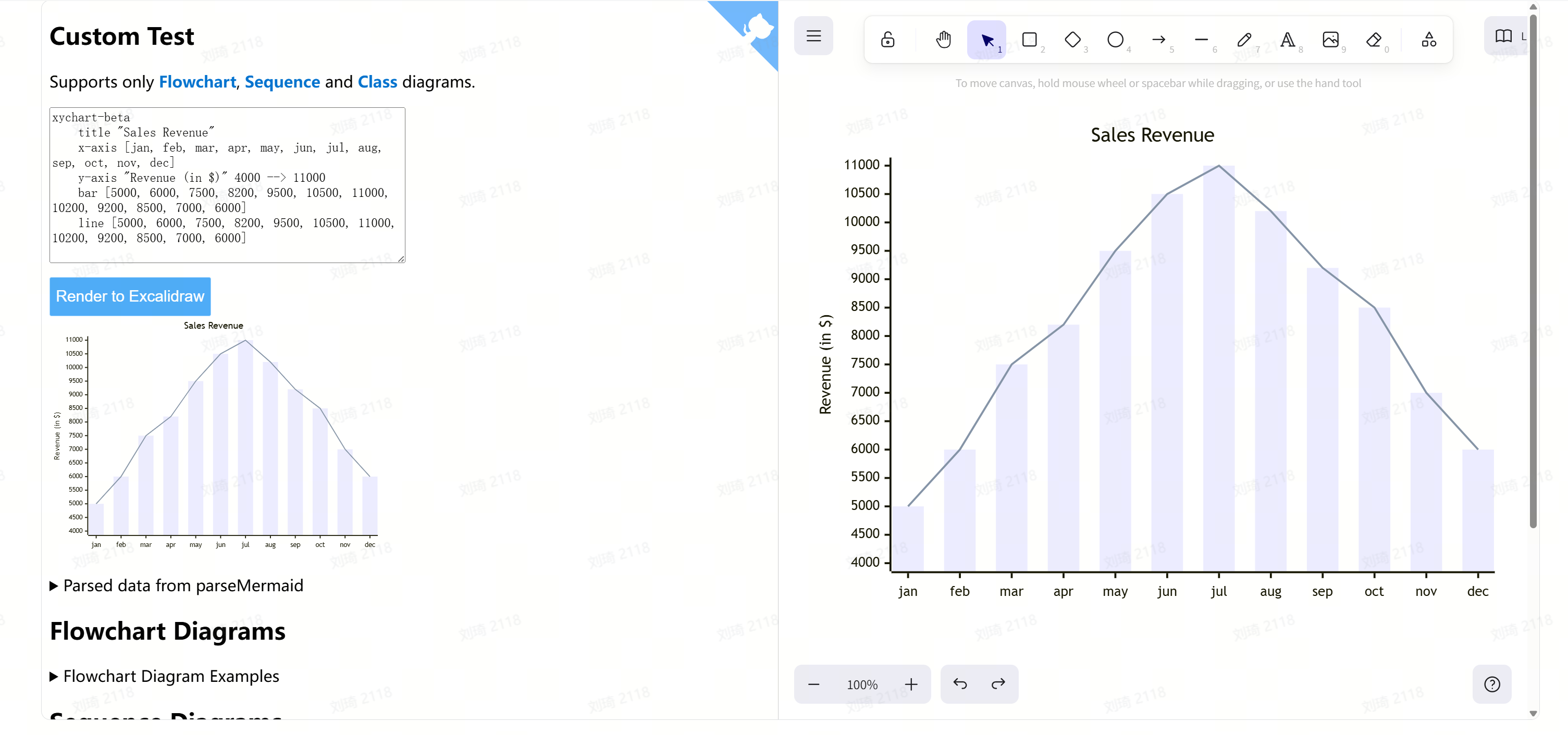
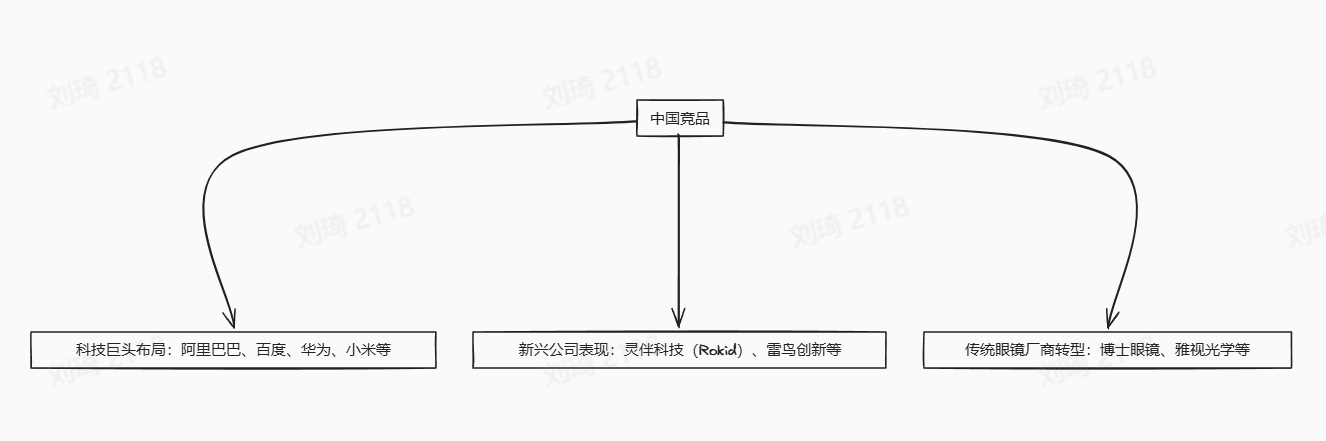
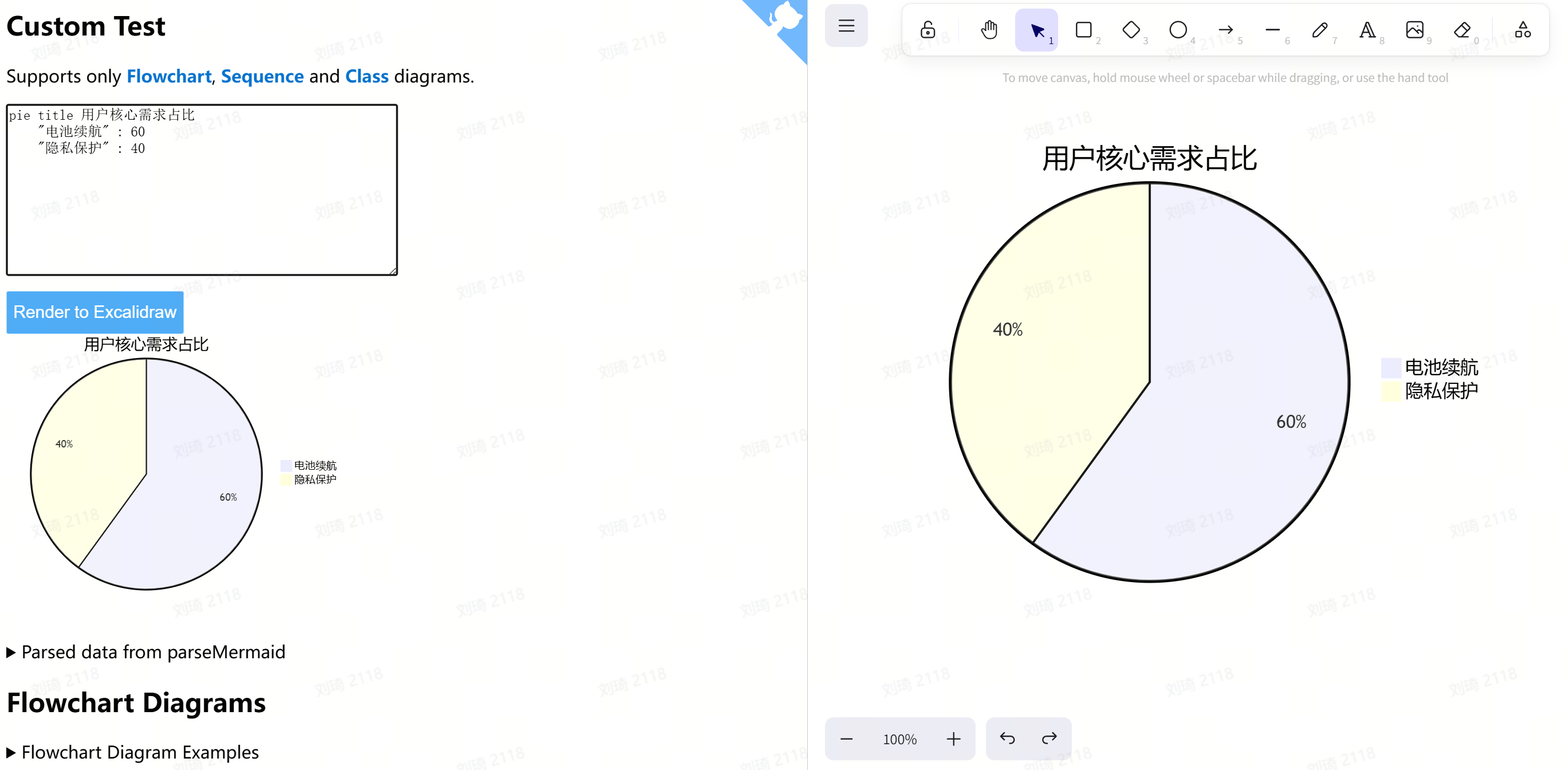
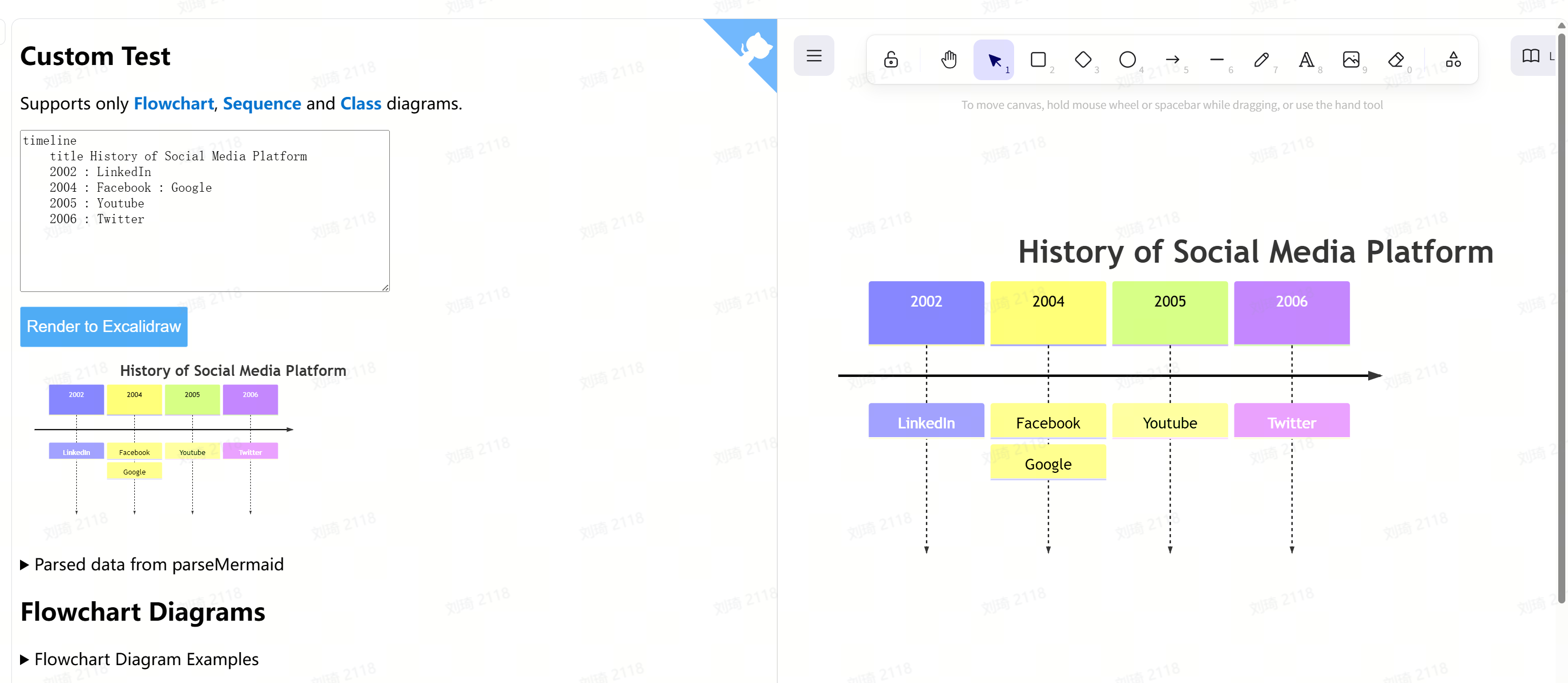
The other is a Mermaid tool, which can quickly convert flowcharts, coordinate charts, and pie charts.
Mermaid compatibility isn’t particularly good, so I only appended suggestions for Mermaid diagrams without incorporating them into the process.
2. AI-generated image prompt words
This is actually another template I made before:
https://ilovezhiwai.feishu.cn/wiki/Bv1ZwJ5tcimQkYkU4OPcUczNnQG?table=ldxmb17UU0j3gXoV
This template supports text generation, image generation, and video generation.
If you observe closely enough, you should notice that some “photos” were used in the PPT slides just shared:


These photos would typically require searching the internet, but these few are not—they come from AI-generated images.
Moreover, you can constrain their actions, behaviors, and even attire through prompts. AI image generation is truly much faster than finding images.





That’s all.
Although the automation level is not high enough, it’s quite fragmented and incomparable to finished products.
But I personally feel it can still help me solve some of my own practical problems.
I hope that in the realm of PPTs, AI can assist more with my thinking and logical structuring, rather than simply listing an outline and then applying a mediocre template. If you share the same needs as me, I hope you’ll like this template of mine.
I also hope there will be better out-of-the-box AI PPT products in the future.